Closed · opens today at 07:00 Mixed
Mixed
Turkish BathTraditional Hammam Ritual +1

9 venues without a price are not shown.
1 venue found
Closed · opens today at 07:00 Mixed
The map couldn't be loaded
A salt room is an unheated, quiet relaxation room whose walls, and often the floor, are lined with blocks of rock salt or Himalayan salt. It is also known as salt therapy or halotherapy. In some rooms a device called a halogenerator disperses very finely ground dry salt into the air; others simply have salt-lined surfaces and dim lighting.
A salt room is not a heat treatment: it is kept at room temperature, the air is dry and you are not expected to sweat. In this respect it is a calm stop along the way that can also be used by those who find the intense heat of the hammam and sauna uncomfortable. In Turkey, salt rooms are mostly found in hotel spas, in the area with the hammam and sauna.
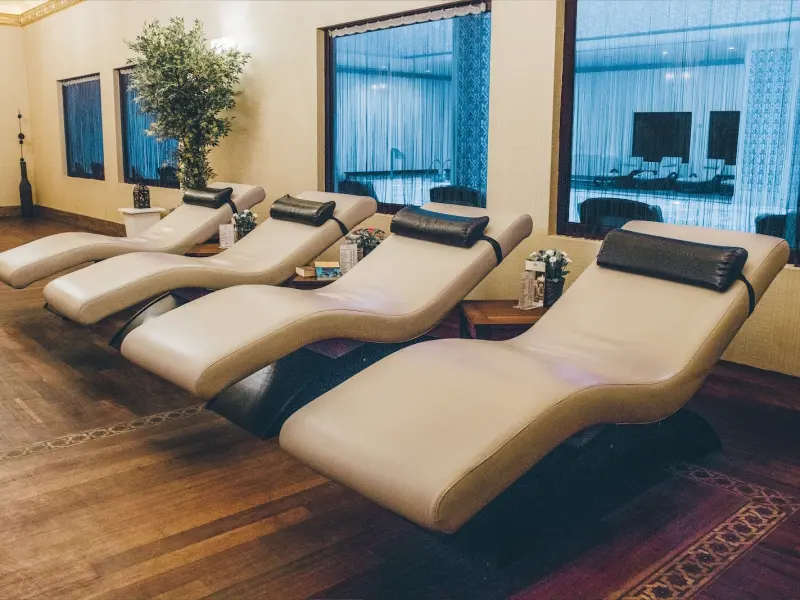
You usually go into the salt room in a robe, spa wear or comfortable everyday clothes; if the floor is covered in salt, the venue may ask you to wear socks or shoe covers. In the room you lie on loungers or sit on cushions and breathe normally and calmly. The lighting is dim, and some rooms play soft music. You should not talk or use your phone in the room, and should not touch your eyes after touching the salty surfaces.
Within a spa programme, the salt room can be used for resting between or after the hot areas. A general framework for how to order it with the Turkish bath, sauna and pool can be found in the guide explaining the order in which to use the hammam, sauna, steam room and pool.
Salt room sessions usually last 30-45 minutes. When used as part of a spa package the time is often unrestricted; when offered as a separate session it is limited to a set time. On your first visit, a short stay is enough to see how you react to the dry air in the room. There is no generally accepted number of sessions or course of treatment; the multi-session packages offered by venues are a commercial arrangement.
A salt room suits those who want to rest in a cool, quiet, dimly lit setting. Users may describe a feeling of freshness in the nose and throat; however, it is not accepted knowledge that a salt room treats asthma, bronchitis, allergies or skin conditions. Do not change the treatment and medication your doctor has recommended because of a salt room.
Do not go in, or consult your doctor first, in the following cases:
| Treatment | Temperature | Humidity | Purpose |
|---|---|---|---|
| Salt room | Room temperature | Low | Quiet rest |
| Sauna | Very hot | Low | Sweating and warming up |
| Steam room | Hot | Very high | Resting in humid heat |
| Turkish bath | Warm to hot | High | Washing, kese (exfoliating scrub) and foam wash |
Some venues also have heated salt saunas with walls lined with salt blocks. A salt sauna is a type of sauna, and the heat warnings that apply to saunas apply to it too; it is not the same thing as an unheated salt room.
It is not an accepted fact that a salt room treats sinusitis. Some users describe a feeling of clearer nasal passages during a session, but this feeling is temporary and varies from person to person. For recurring or long-lasting sinusitis, see an ear, nose and throat doctor and continue the treatment you have been recommended.
Do not go in without consulting your doctor. Dry salt particles can trigger coughing, wheezing or shortness of breath in some people with asthma. If your doctor approves, keep the first session short, keep your reliever medication with you and leave the room as soon as you feel unwell. A salt room is no substitute for asthma treatment.
In terms of use, there is no significant difference. Both salts consist largely of sodium chloride; the pink colour of Himalayan salt comes from the trace minerals it contains. The real difference between rooms lies in their appearance, their lighting and whether or not they have a halogenerator.
It is not essential. In rooms with a halogenerator, a thin layer of salt may remain on your skin, hair and clothes; shaking it off or taking a quick shower is enough. Do not touch your eyes or contact lenses with salty hands.
It varies by venue; some facilities accept children while others set an age limit, so ask before going in. If your child has asthma or another chronic respiratory condition, consult your paediatrician first. Children should not be left alone in the room and should not put their hands to their mouth or eyes after touching salty surfaces.

Are you sure?
Choose one more venue to compare.