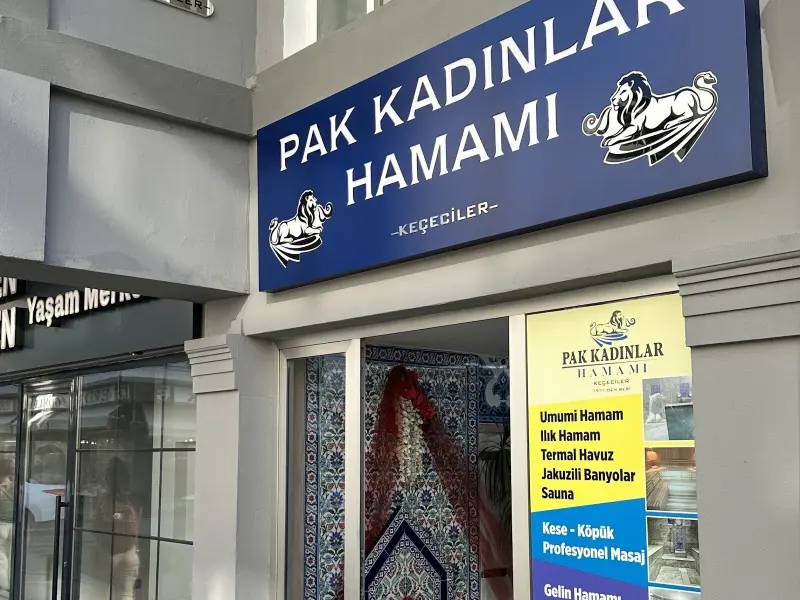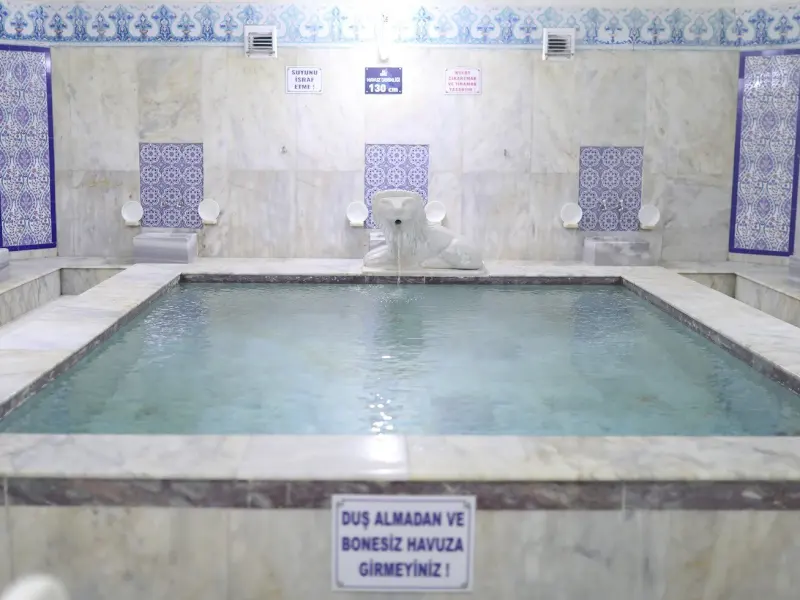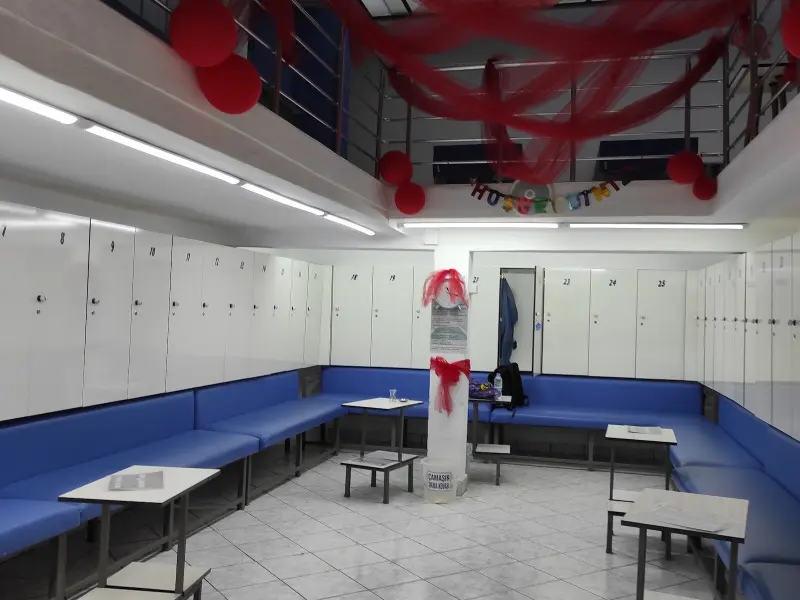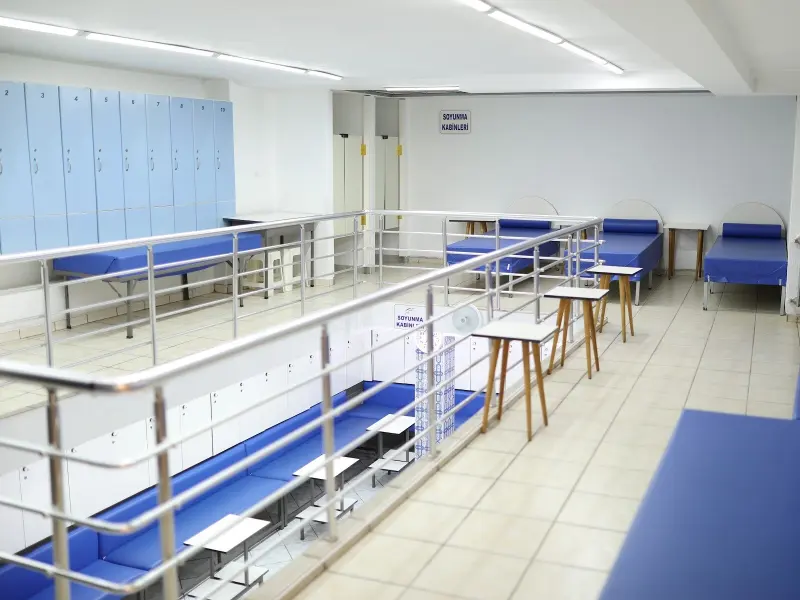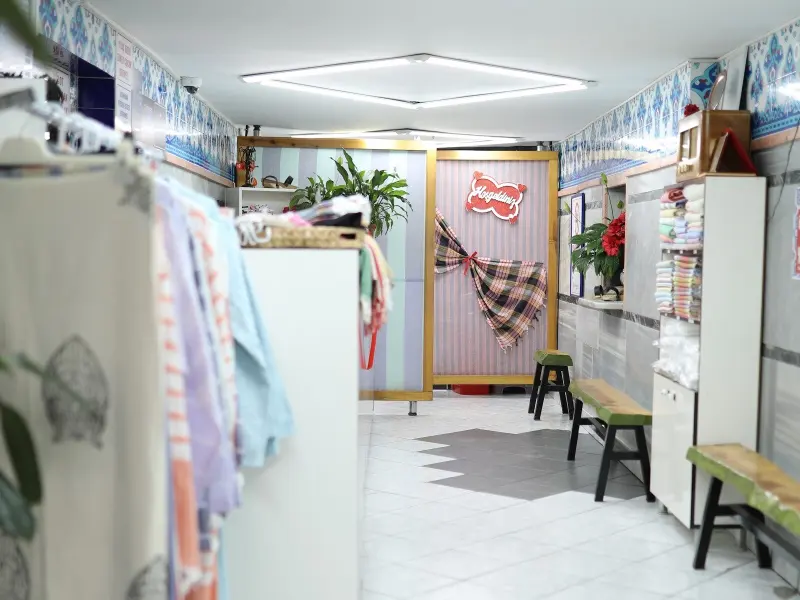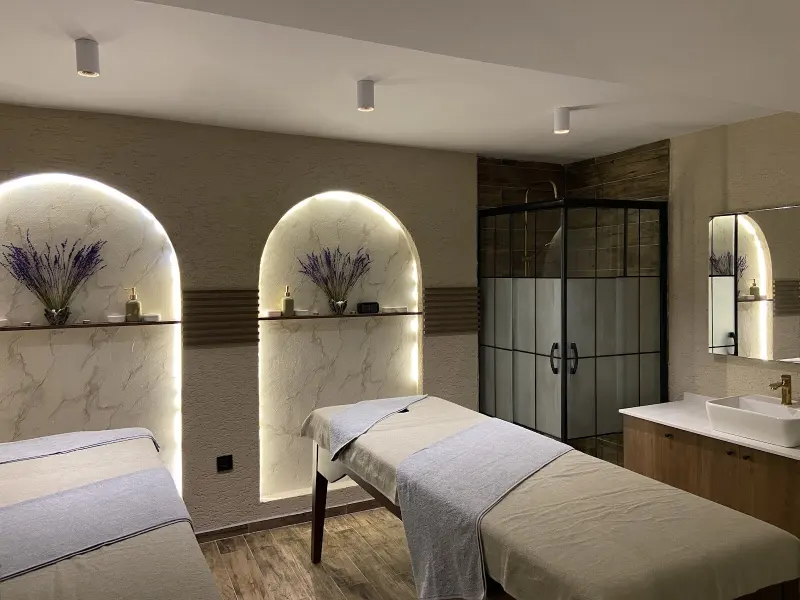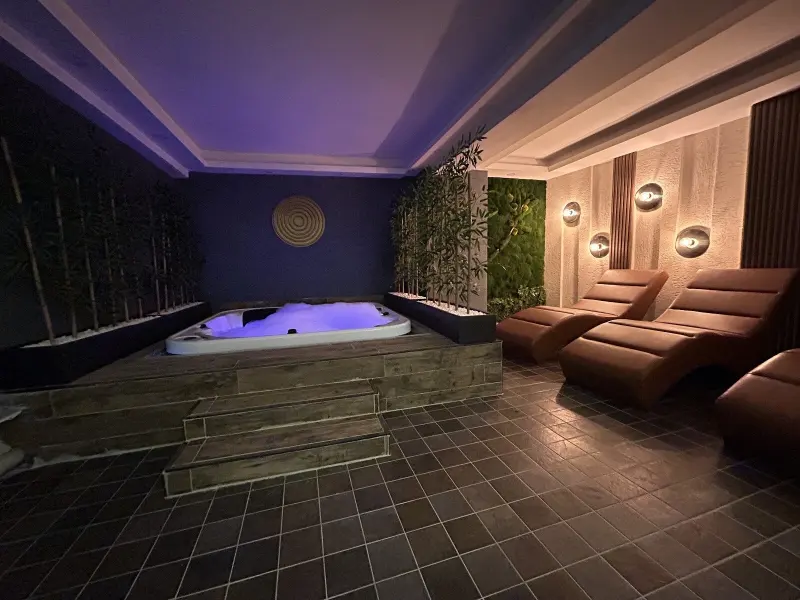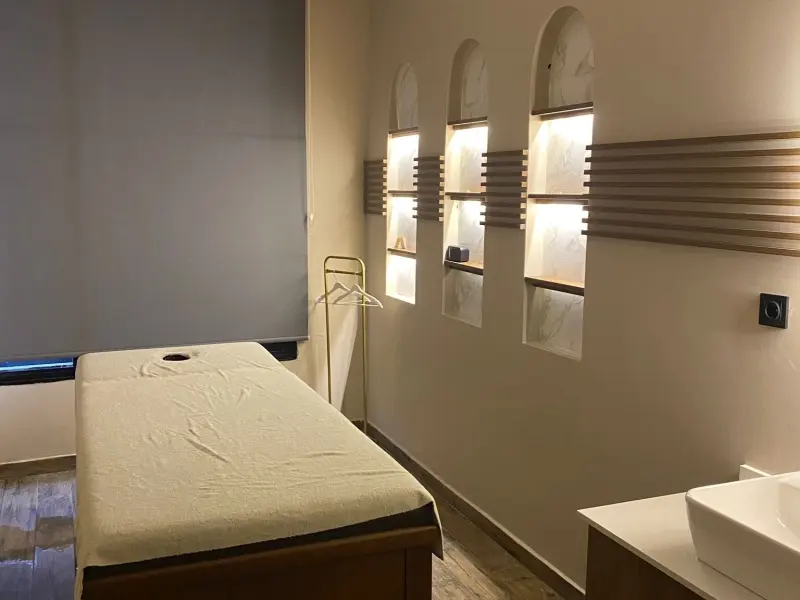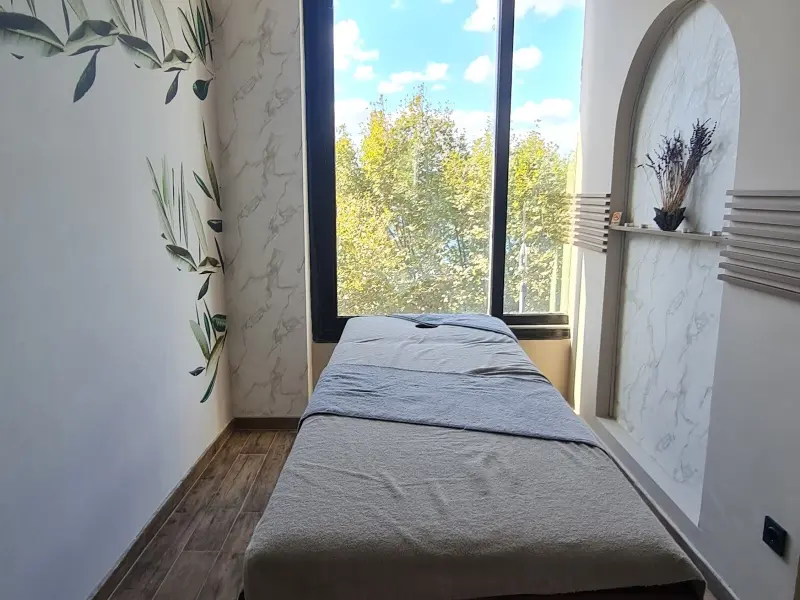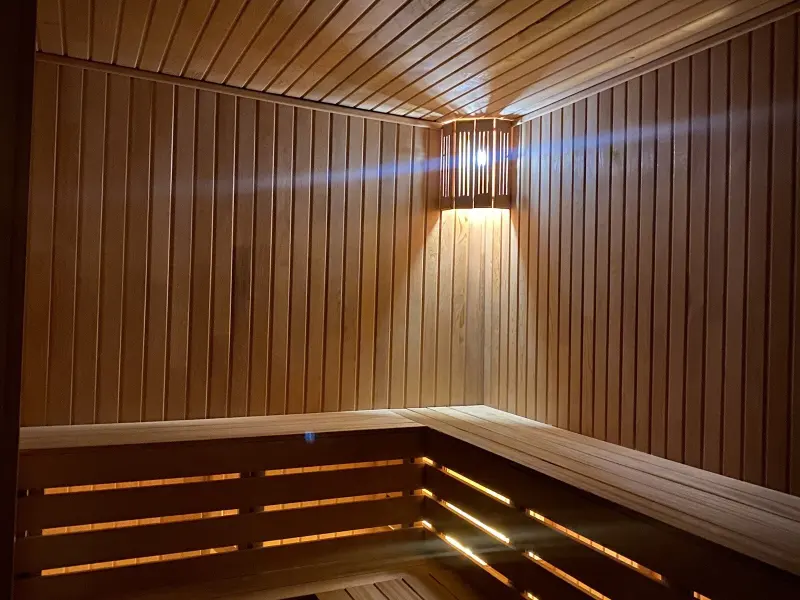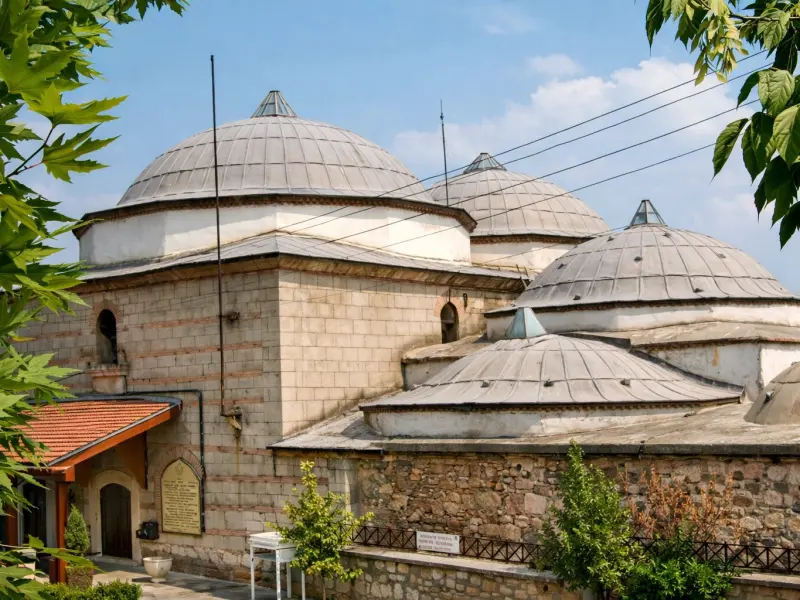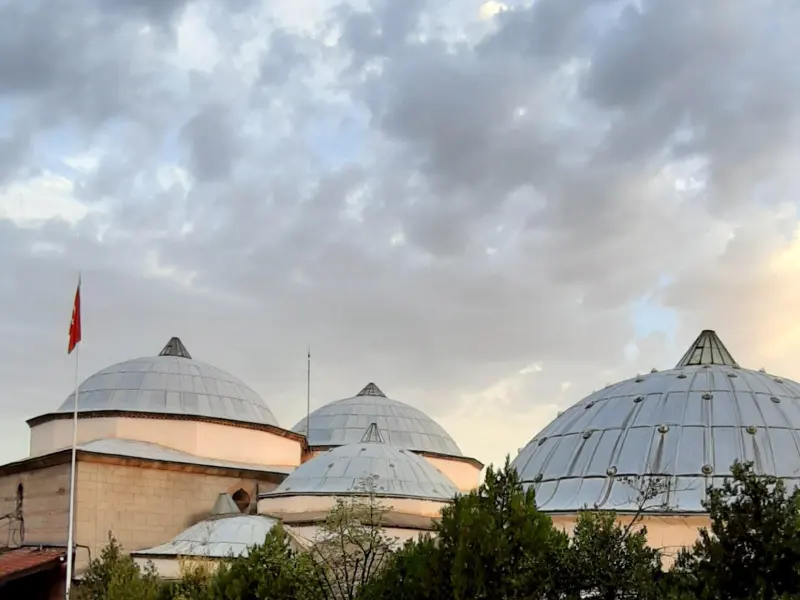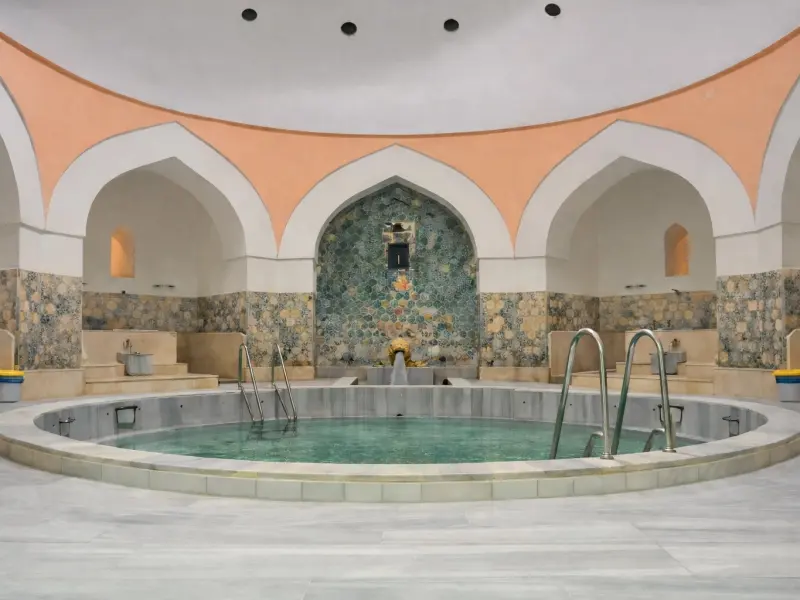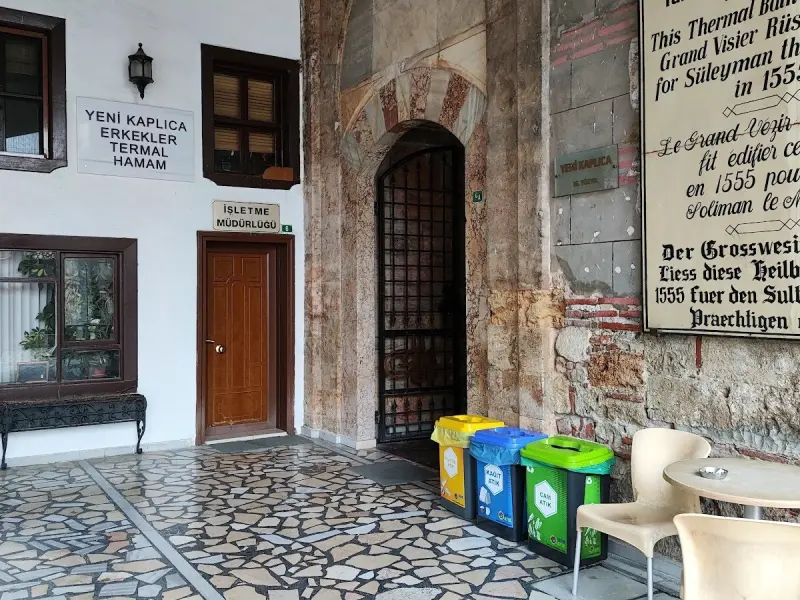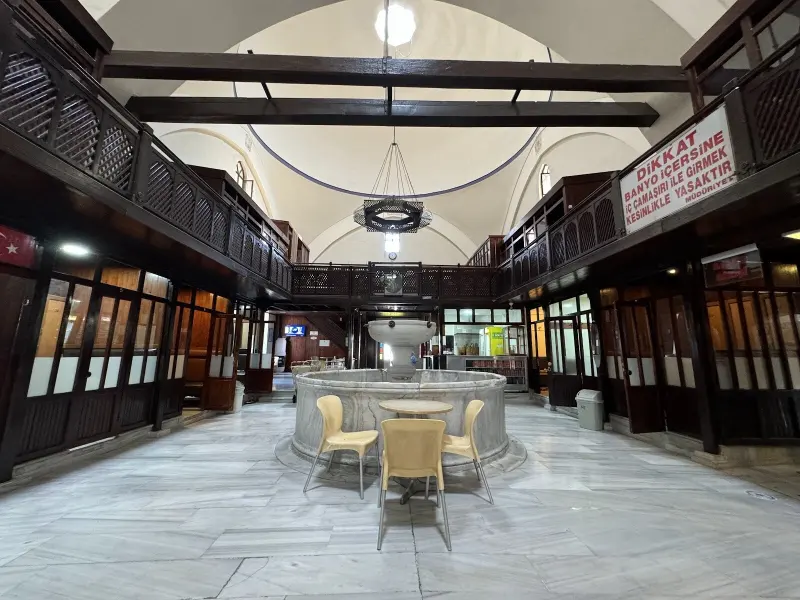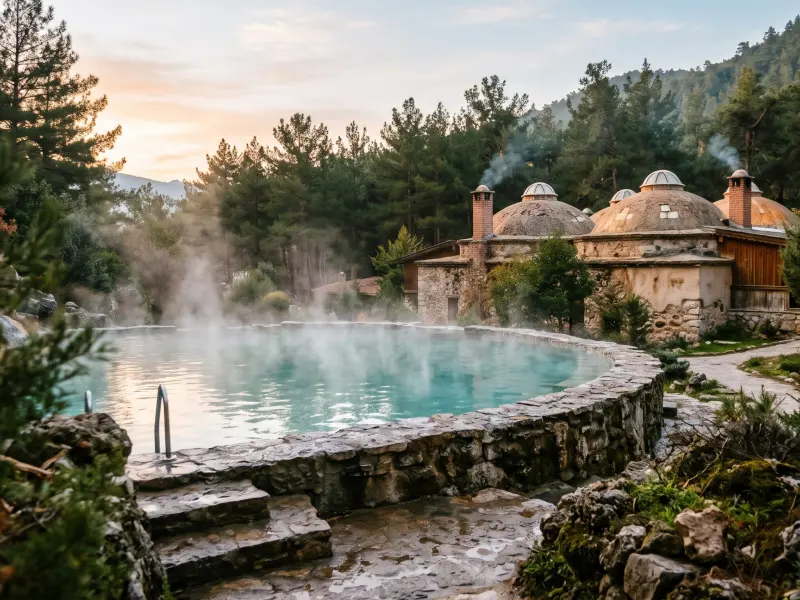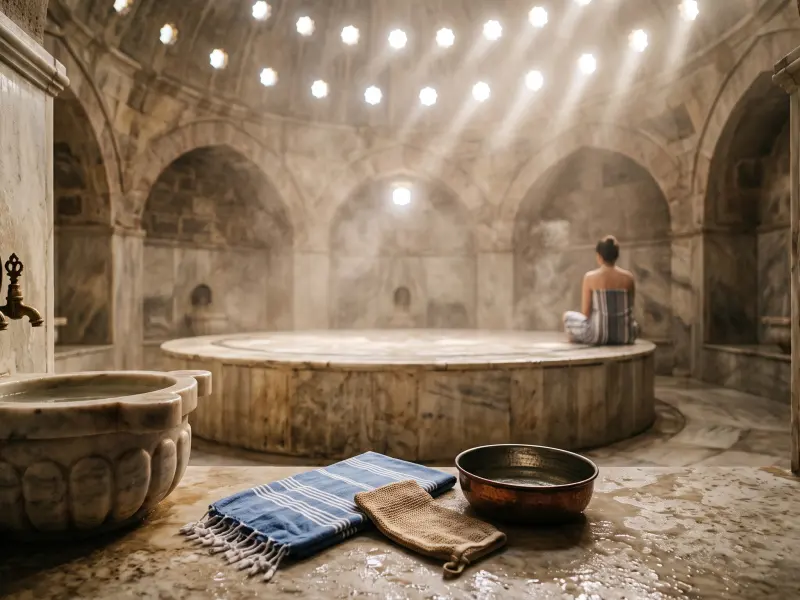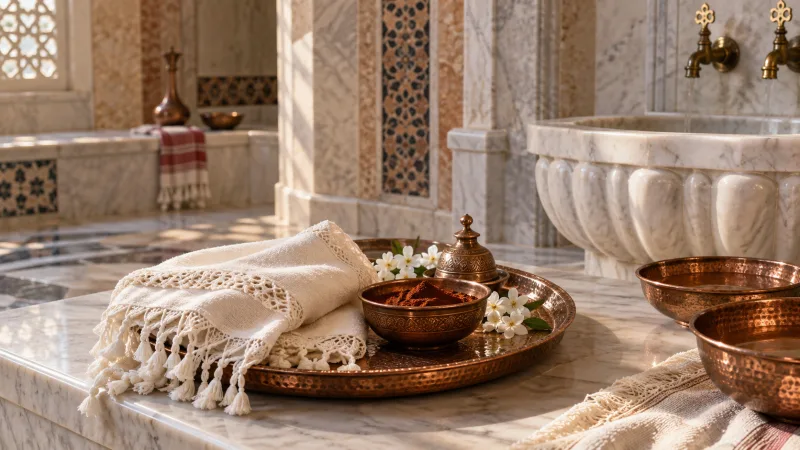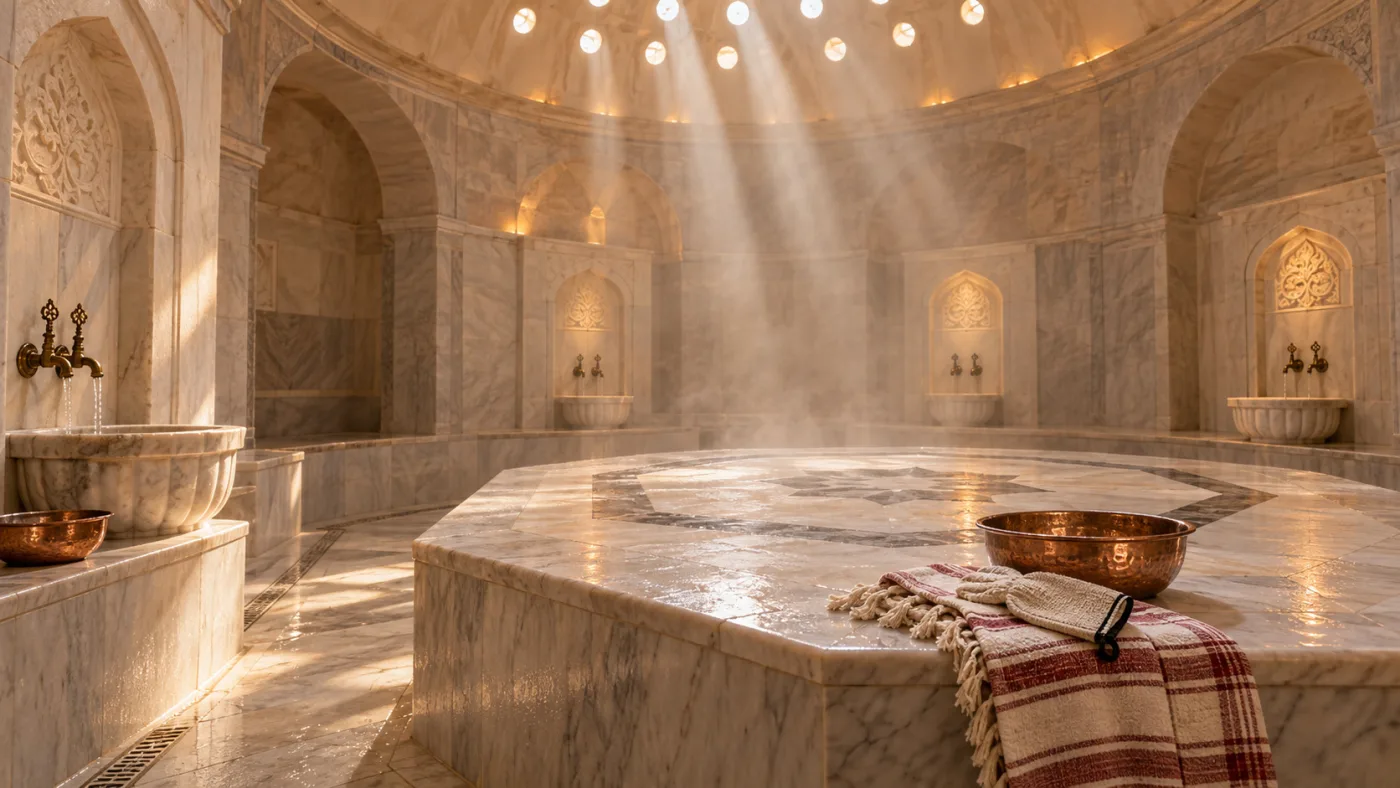
A Turkish bath is a traditional ritual of washing and cleansing that begins with sweating on hot marble and continues with a kese (exfoliating scrub) and foam massage. It emerged as Roman bathing culture took on its own form in the Ottoman period, and it has followed the same basic sequence for centuries.
How does a hammam session unfold?
A classic session has four stages and lasts between 45 and 90 minutes in total.
1. Warm room — warming up the body. After the changing area, you spend 10-15 minutes in a warm room. The aim is to warm the body gradually; going straight into the hot room puts a strain on the circulation.
2. Hot room and navel stone. You lie for 15-20 minutes on the heated marble platform at the centre of the hammam. This is where the sweating starts, the pores open and the skin is prepared for the kese. The navel stone is usually around 40-45 °C.
3. Kese. A male or female attendant removes dead skin with a kese mitt. This takes 10-15 minutes and can feel rough the first time; if it is uncomfortable, it is normal to say so, and the pressure will be adjusted.
4. Foam massage and rinse. The body is massaged with foam made from olive oil soap, then rinsed with warm water. The session ends in the relaxation area with tea or sherbet.
For first-timers
- What should I bring? Most venues provide a peshtemal, towel and slippers. All you need to bring is swimwear or a change of underwear.
- What do I wear? The peshtemal is wrapped around the waist. In the women's section a swimsuit or bikini is also common; in the men's section the peshtemal is standard.
- Should I go on an empty or a full stomach? Do not go straight after a heavy meal. The heat makes digestion harder; waiting 1-2 hours is more comfortable.
- What should I do afterwards? Drink plenty of water. Sweating causes fluid loss, and that is the most common cause of dizziness.
Who should take care?
If you have high blood pressure, a heart condition or an open wound, or are pregnant, do not go into the hot room without consulting your doctor. In these cases many venues suggest a shorter programme at a lower heat.
Are women and men separate?
Most historic hammams have separate sections or separate hours for women and men. In hotel spas, mixed use is more common. In our guide, this information is given on each venue's profile.
You can browse venues offering a Turkish bath on the service page, and look through venue types for your city.
This article was written by the Spa Deneyimi editors. Rankings and verification badges cannot be bought.