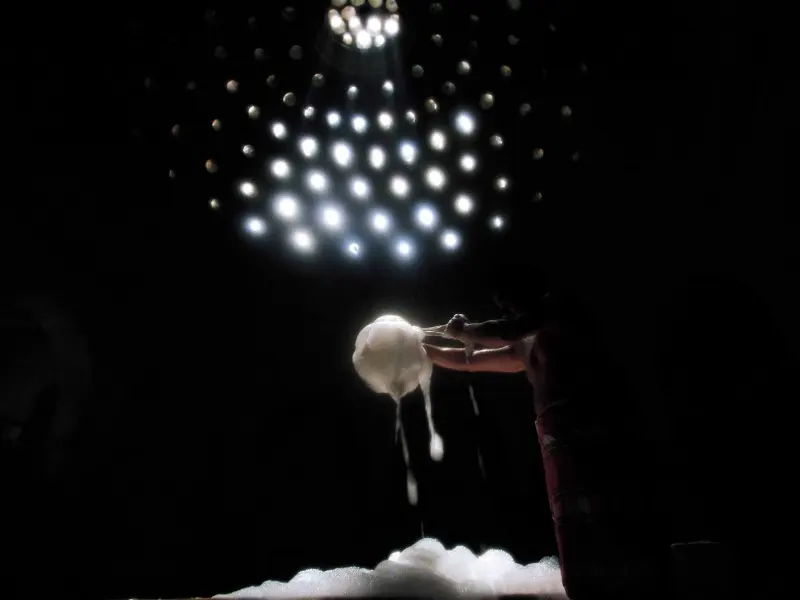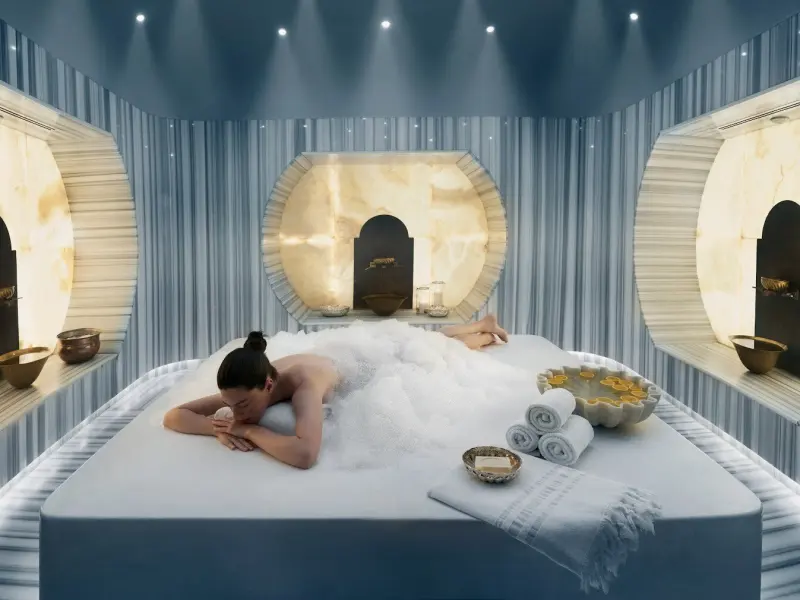
For most first-timers, yes: a Turkish bath is worth doing at least once. You warm up on heated marble, an attendant scrubs you with a coarse mitt and washes you in soap foam, and you leave with skin that feels noticeably smoother. The scrub is firm rather than painful, you keep a wrap or swimwear on, and in most Istanbul hammams you are washed by someone of your own sex.
Below are straight answers to the questions people are often too shy to ask, then an honest verdict.
Does the kese scrub hurt?
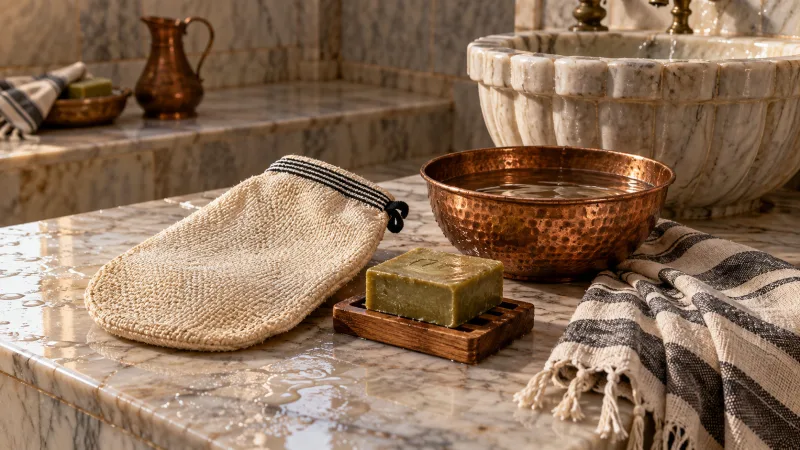
The kese scrub does not hurt for most people, but it is not gentle either. A kese is a coarse woven mitt, and the attendant works it over your whole body with long, firm strokes once the heat has softened your skin. It feels like a vigorous rub, rougher on thin skin such as the inner arms and stomach, and you will probably see grey rolls of dead skin come away. That is normal; attendants see it all day.
If the pressure is too much, say so: ‘hafif, lütfen’ (lightly, please) works, and so does a gesture. Skip the scrub on sunburnt or broken skin, and shave the day before rather than that morning, so the mitt does not sting.
Afterwards your skin may look pink for a while and feels soft and very clean, because a layer of dead skin really has gone. Drink water, moisturise, and use sunscreen if you are heading into the sun. Our guide to what kese is and how often to have it explains the technique.
Are you naked in a Turkish bath?
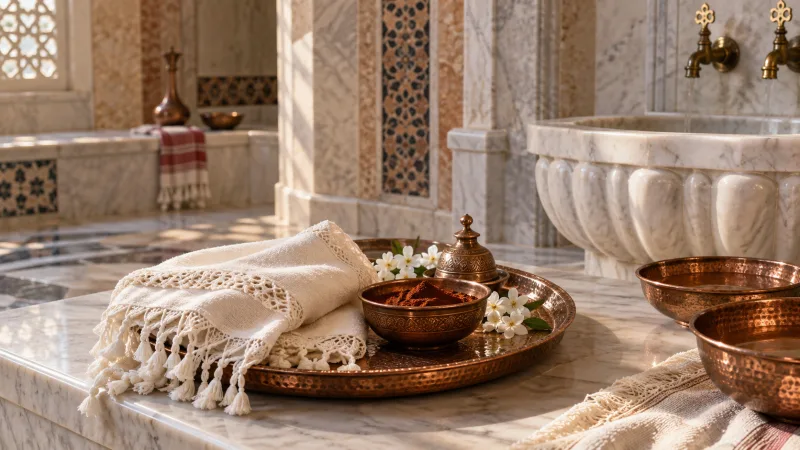
No, you are not expected to be naked in an Istanbul hammam. Every historic hammam in this article gives you a peshtemal, the thin cotton wrap you tie around yourself, and most let you wear swimwear or underwear underneath. Süleymaniye Hamamı provides a bikini, shorts and peshtemal for women and shorts for men. Çemberlitaş Hamamı says you are welcome to bring your own swimsuit, and Zeyrek Çinili Hamam hands out single-use underwear. Galatasaray Hamamı puts the rule in writing: the lower body stays covered by the peshtemal.
If you are self-conscious about your body, three things help. Attendants wash people of every age and shape all day, and to them you are simply the next guest. You can keep your top half covered too, with a bikini top or swimsuit. And if sharing the hot room with strangers is the real worry, book a private hammam in a hotel spa or go with a friend. More on covering up, swimwear and privacy is in what to wear in a hammam or spa.
Who washes you, and is it a man or a woman?
In most historic hammams you are washed by an attendant of your own sex: a natır in the women's section, a tellak in the men's. Çemberlitaş Hamamı, a double hammam with separate sections, states that guests are served by staff of the same gender. Other hammams have a single section and split the day into women's and men's hours; our guide to women-only hammams in Istanbul lists the sections and times.
Mixed hammams are the exception. Süleymaniye welcomes couples and families together, and its website does not say who does the scrub, so ask when you book if it matters to you. Hotel spas are often mixed too, and you can request a female or male therapist; Melas Spa & Wellness in Beşiktaş, for example, offers female therapists.
The awkward part is mostly not knowing what happens next. The attendant leads with gestures and a few words: lie down, turn over, sit up, close your eyes while the water is poured. There is little conversation; you can simply lie there.
How hot is a hammam?
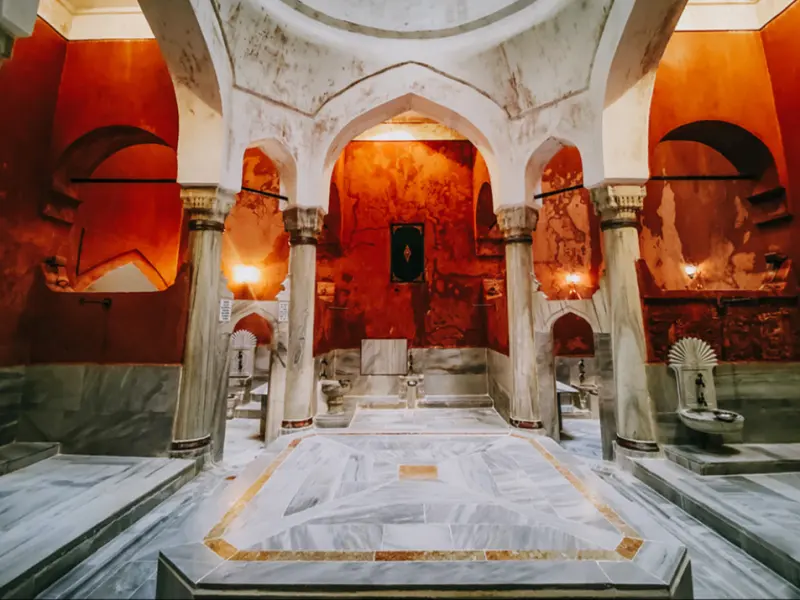
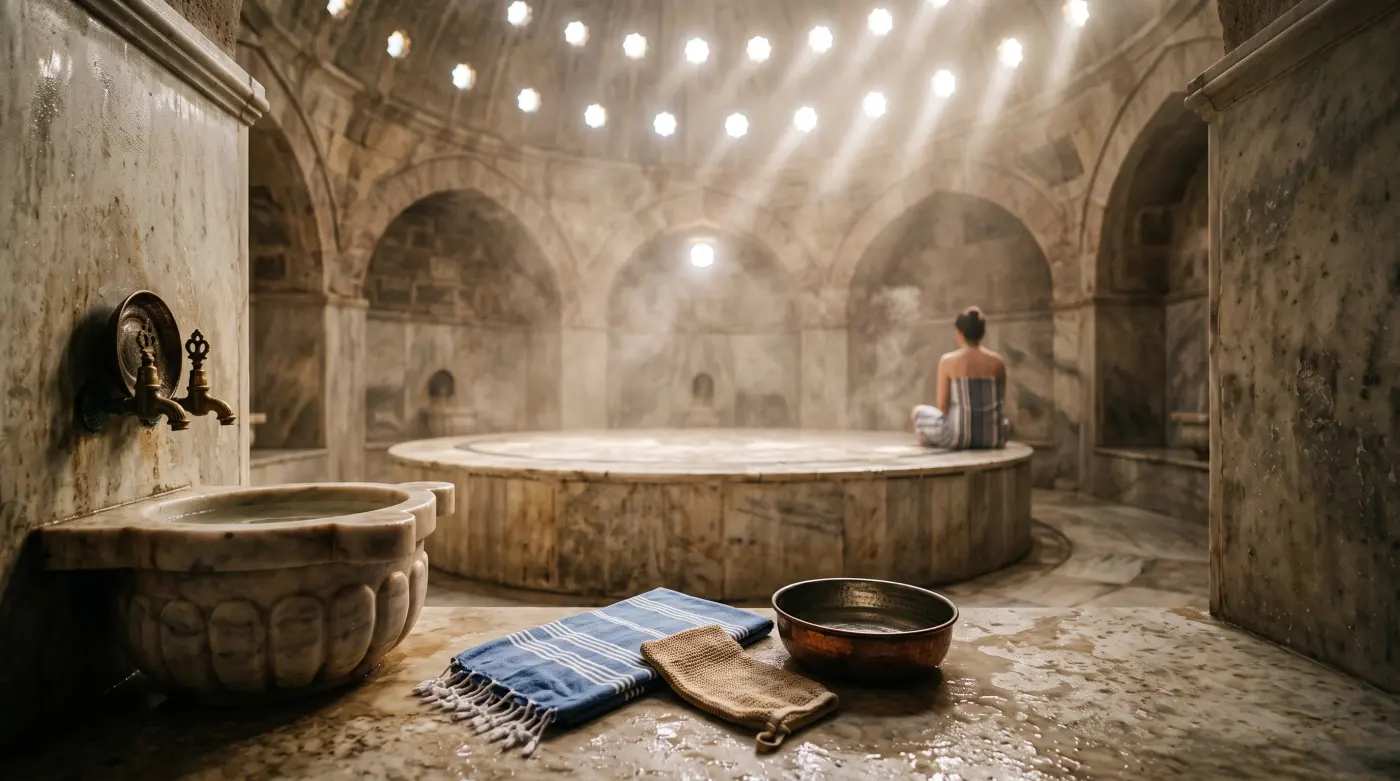
A hammam is warm and very humid rather than fiercely hot. The heat rises from under the marble floor and the central raised platform, the göbek taşı, where you lie to sweat while steam hangs in the air. It feels different from a sauna's dry heat and is meant to be bearable for a while: Süleymaniye Hamamı builds 30 minutes of warming and resting on the stone into its ritual.
You control the heat more than you might think. The marble basins along the walls, called kurna, have taps, and you can pour cooler water over yourself at any time or step out to the cooler rooms. If you feel dizzy or your heart races, sit up slowly and leave the hot room. For room-by-room temperatures and humidity, see how hot a hammam is.
Is a Turkish bath hygienic?
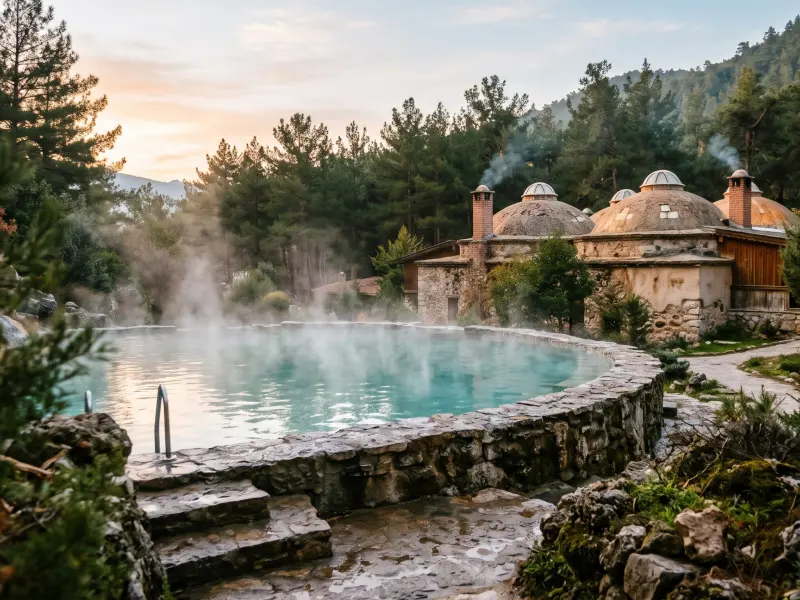
A traditional Turkish bath is built around running water, which is good news for hygiene. You are washed with water poured from a basin rather than soaking in a shared pool: the TDV Encyclopaedia of Islam notes that, apart from thermal springs, Ottoman hammams had no pools or tubs to get into. Towels, a peshtemal and slippers come with the price at Çemberlitaş and Süleymaniye.
A few sensible checks still help. Ask whether the kese mitt is new, or buy your own beforehand and hand it to the attendant. Bring your own flip-flops if you prefer, and leave valuables in your locker or changing cabin.
How long does a hammam take?
Plan on 90 minutes to two hours for a hammam visit, including changing and resting, even if the scrub itself is short. At Çemberlitaş Hamamı the kese and foam wash lasts 15 minutes, but entry has no time limit, so you can stay in the heat as long as you like. Süleymaniye Hamamı's single package runs to about 105 minutes: 15 minutes of welcome, 30 minutes warming on the stone, 30 minutes of scrub, soap wash and soap massage, then 30 minutes for drinks and dressing. Zeyrek Çinili Hamam suggests allowing at least 90 minutes. Hotel spas sell shorter slots: Melas offers its hammam ritual in 30 or 40 minutes. For more timings, read how long a hammam takes.
Historic hammam or hotel hammam?
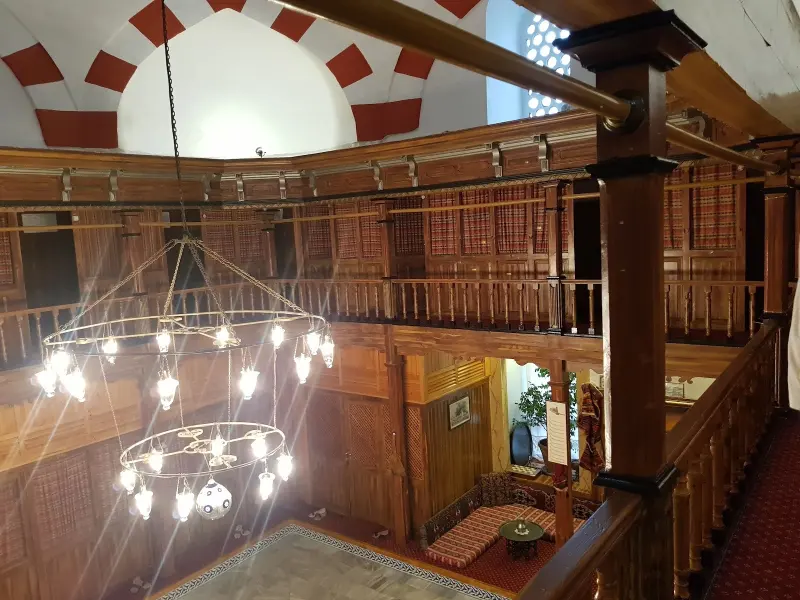
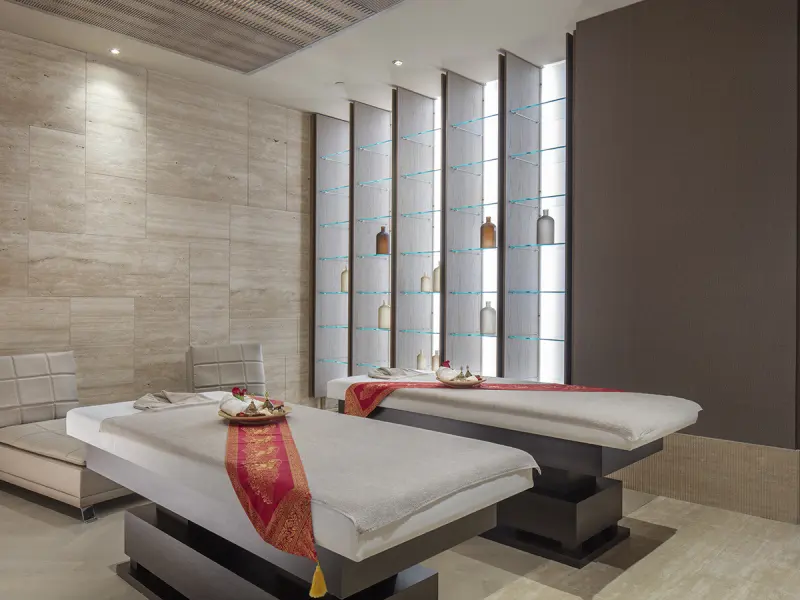
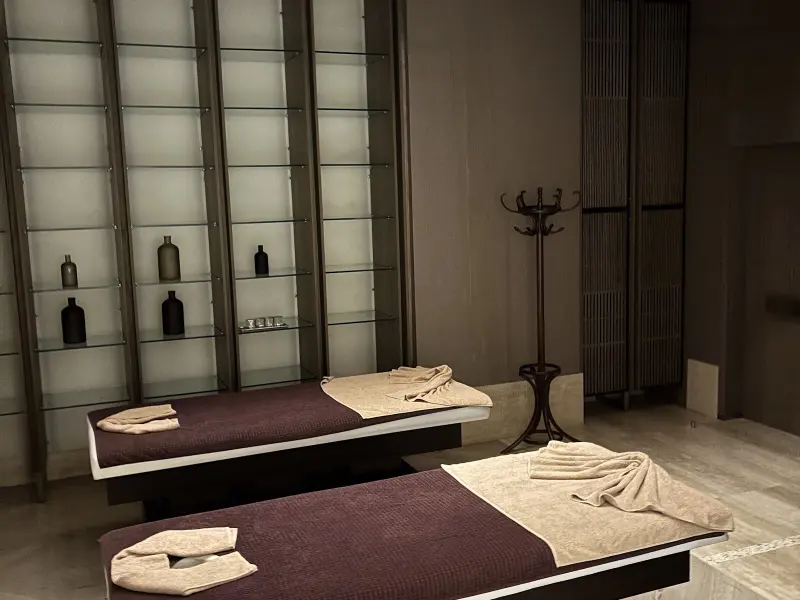
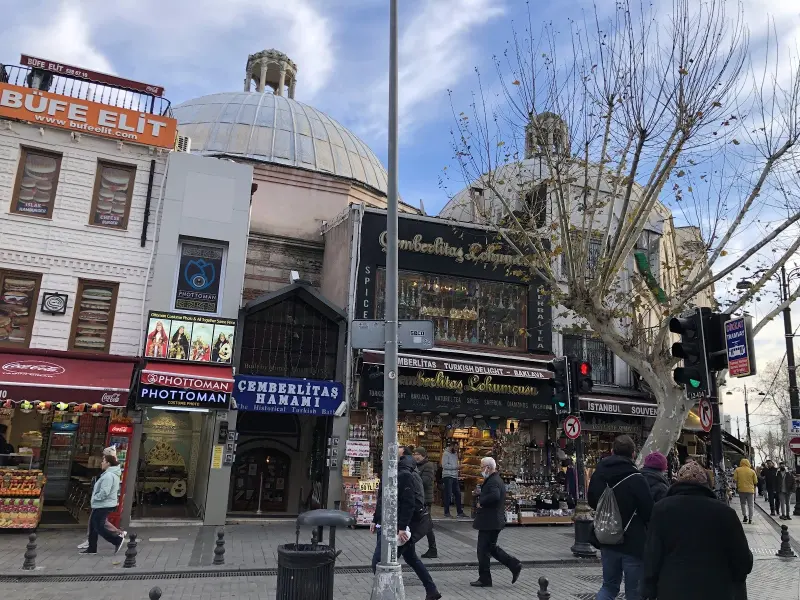
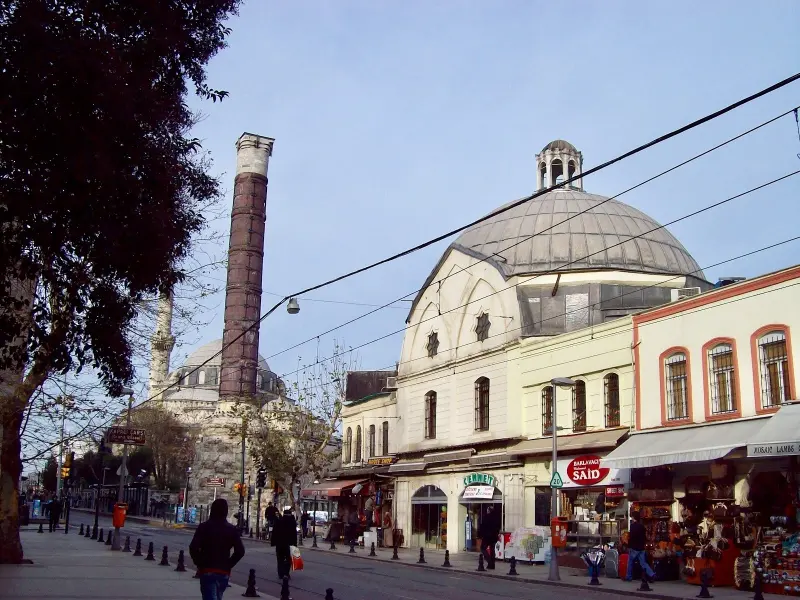
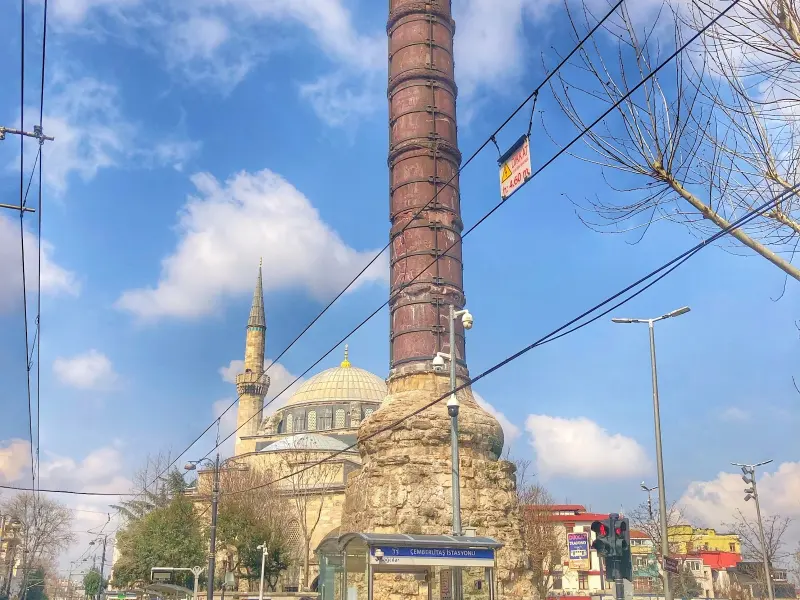
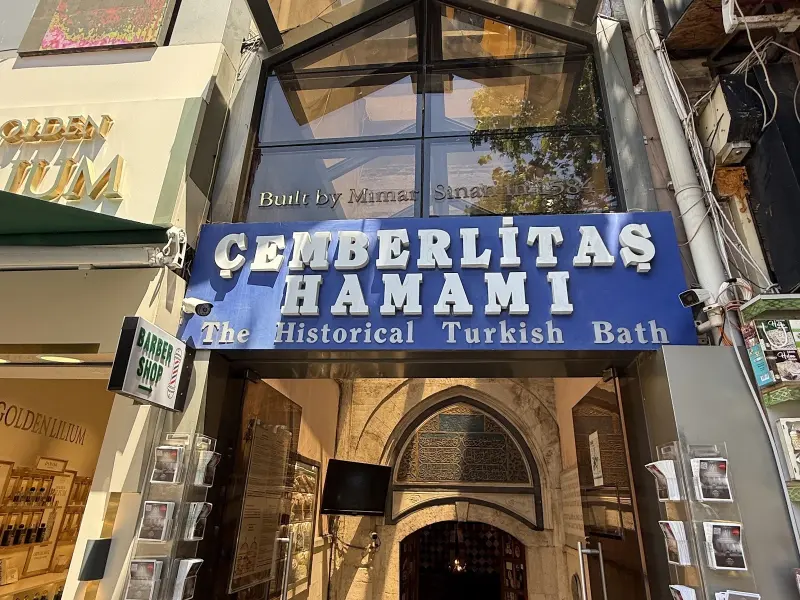
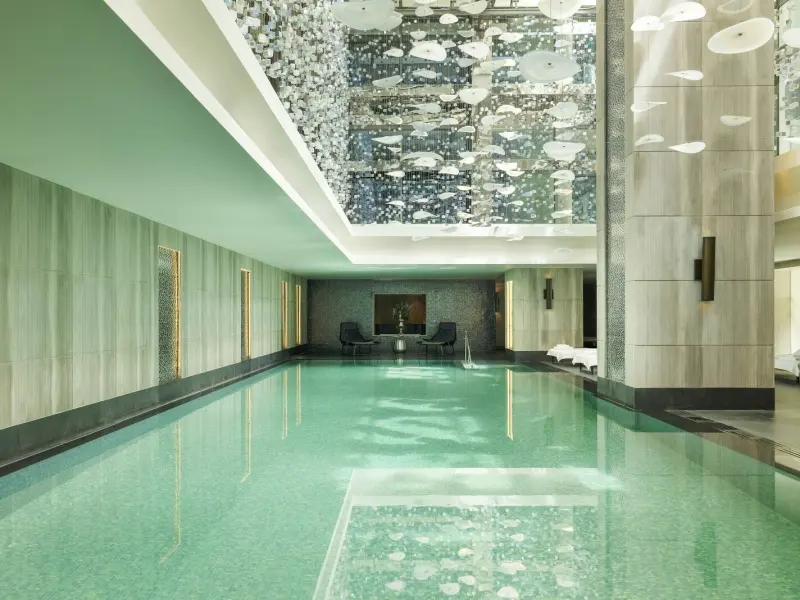
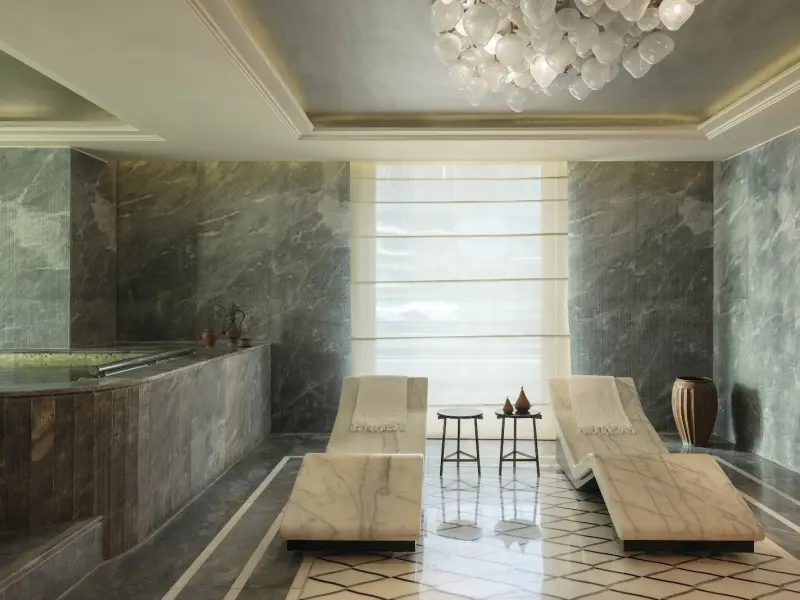
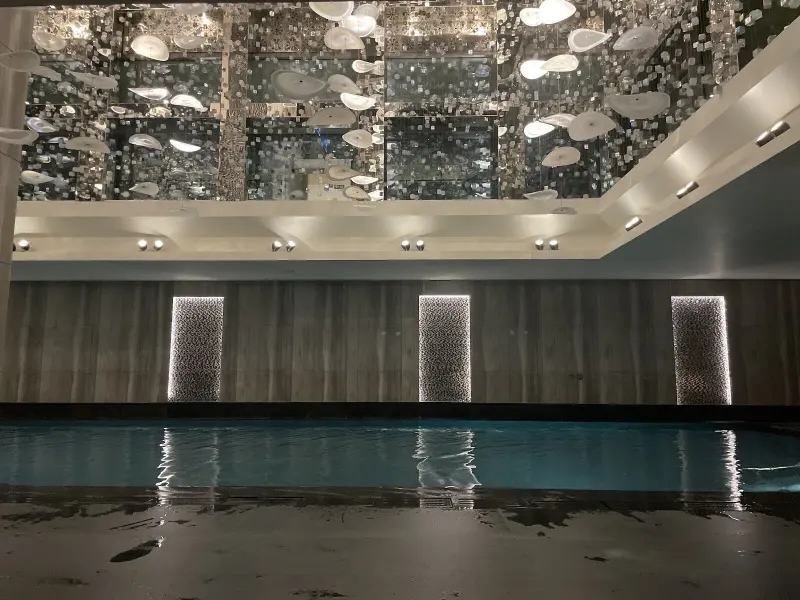
A historic hammam is better for atmosphere; a hotel hammam is better for privacy and comfort. In a historic hammam such as Çemberlitaş, built in 1584, you bathe alongside other guests in an Ottoman hot room, typically under a dome pierced with small glass openings that let in daylight. In a hotel spa the hammam is newer and smaller, often with a pool, sauna or steam room nearby, and private or couples' sessions are easier to arrange: Raffles Istanbul Spa in Zorlu Center has three traditional hammams and offers a couples' hammam ritual in its hammam suite.
| Historic hammam | Hotel hammam | |
|---|---|---|
| Setting | Ottoman dome and marble, daylight through glass openings | Modern spa, often with pool, sauna and steam room |
| Who is around | Other guests, separated by section or by hours (Süleymaniye is mixed) | Smaller spaces; private and couples' sessions |
| Prices in October 2026 | Çemberlitaş: entry 3,200 TL, scrub and foam 4,050 TL; Süleymaniye: €90 | Melas: 30-minute hammam ritual 2,200 TL; Raffles: day spa access €125 |
| Best for | History, the full ritual, bathing without hurry | Shy first-timers, couples, adding a massage |
The figures come from the venues' own websites and menus; our Istanbul hammam prices 2026 guide compares every package. Prices change often, so confirm when you book.
Who should skip a Turkish bath or check with a doctor first
A Turkish bath is not for everyone, because long spells in heat and humidity make your heart and circulation work harder. Galatasaray Hamamı does not serve guests with heart conditions, who are pregnant or who are on their period, and asks anyone on medication to make sure the heat will not affect them. Zeyrek Çinili Hamam does not recommend the hammam during pregnancy or for guests with cardiovascular or blood pressure conditions, respiratory illnesses such as asthma, diabetes, open wounds or recent surgery, and advises a light meal with no alcohol beforehand.
Check with your doctor first if you are pregnant, have a heart condition, high or low blood pressure, diabetes or a breathing condition, or have recently had surgery. Leave out the scrub on sunburn, a flare-up of eczema or broken skin. If you are expecting, read massage and spa in pregnancy first.
The honest verdict: who will love it, and who may prefer a massage or a spa
You will probably love a Turkish bath if you enjoy warmth, like being looked after without having to make conversation, and are curious about the buildings: lying under a dome raised in the 16th century, as at Çemberlitaş or Süleymaniye, is part of what you pay for. It also suits anyone who wants to feel properly clean after days of walking Istanbul.
You may prefer a massage or a spa if you dislike heat and humidity, find firm scrubbing unpleasant, or know that lying in a wrap among strangers will spoil it for you. A private hammam in a hotel spa is a good middle ground. An oil massage skips the heat and the scrub entirely, and our guide to massage types helps you choose the right one. If a health condition rules out the heat, a gentle massage is usually the easier choice, after a word with your doctor.
If you are still unsure, start small. A scrub-and-foam package in a historic hammam tells you quickly whether you want the long ritual next time.
Sources
- Süleymaniye Hamamı: price and what is included, checked October 2026
- Çemberlitaş Hamamı: home page and FAQ, checked October 2026
- Çemberlitaş Hamamı: prices, checked October 2026
- Galatasaray Hamamı: hammam terms of use, checked October 2026
- Zeyrek Çinili Hamam: bathing rituals and practical information, checked October 2026
- Raffles Istanbul: spa, checked October 2026
- Raffles Istanbul: spa menu (PDF), checked October 2026
- Melas Spa & Wellness: menu, checked October 2026
- TDV İslâm Ansiklopedisi: Hamam, checked October 2026
This article was written by the Spa Deneyimi editors. Rankings and verification badges cannot be bought.