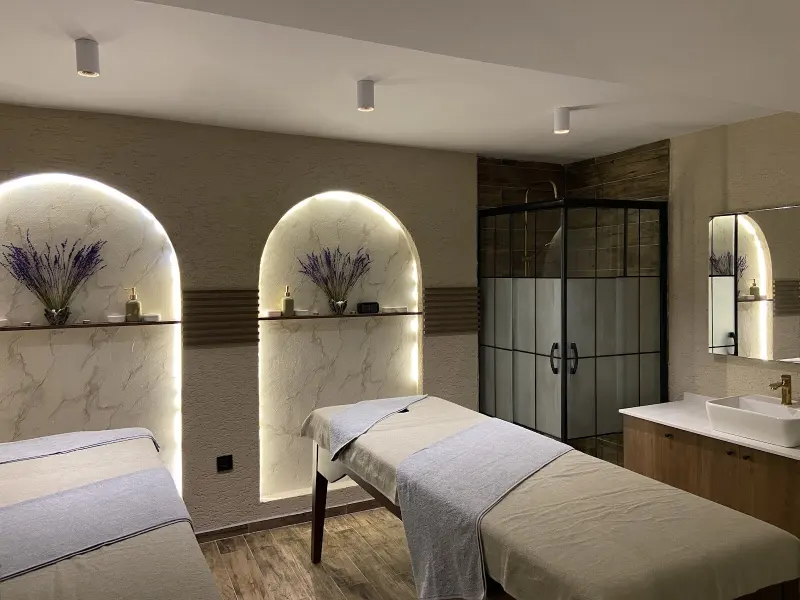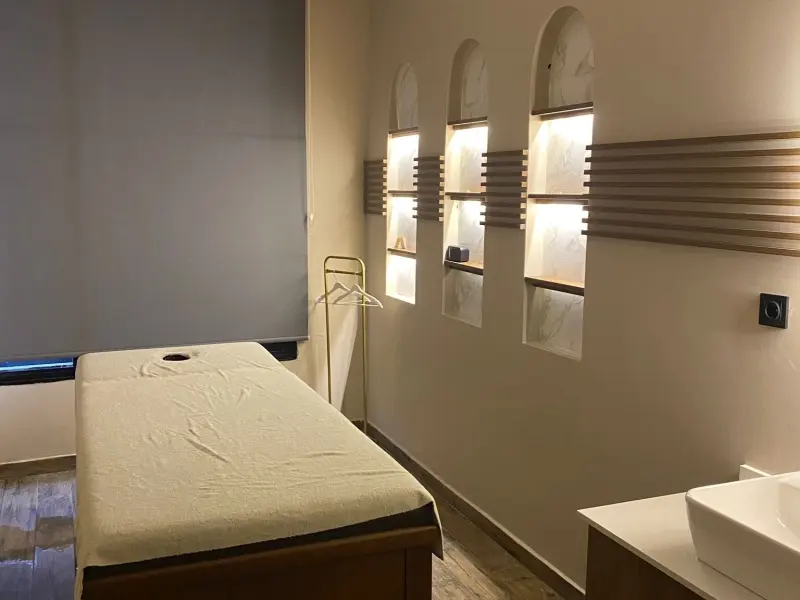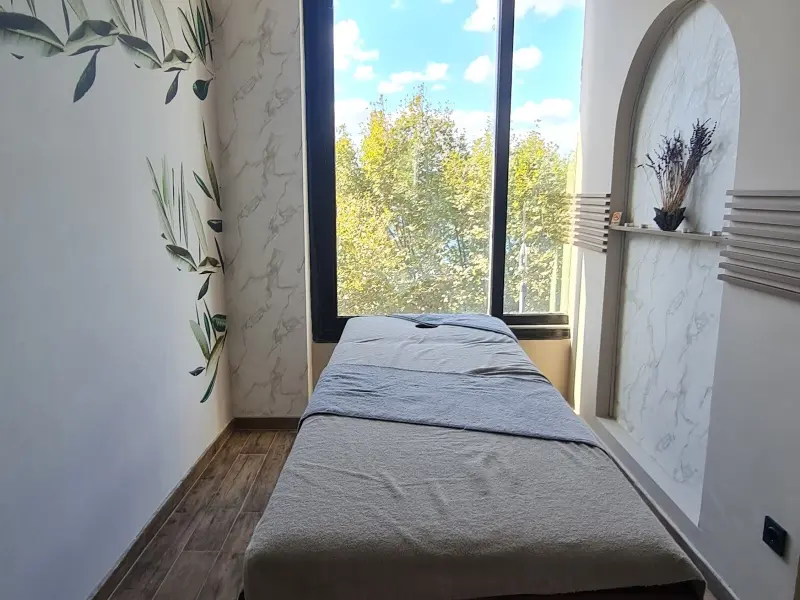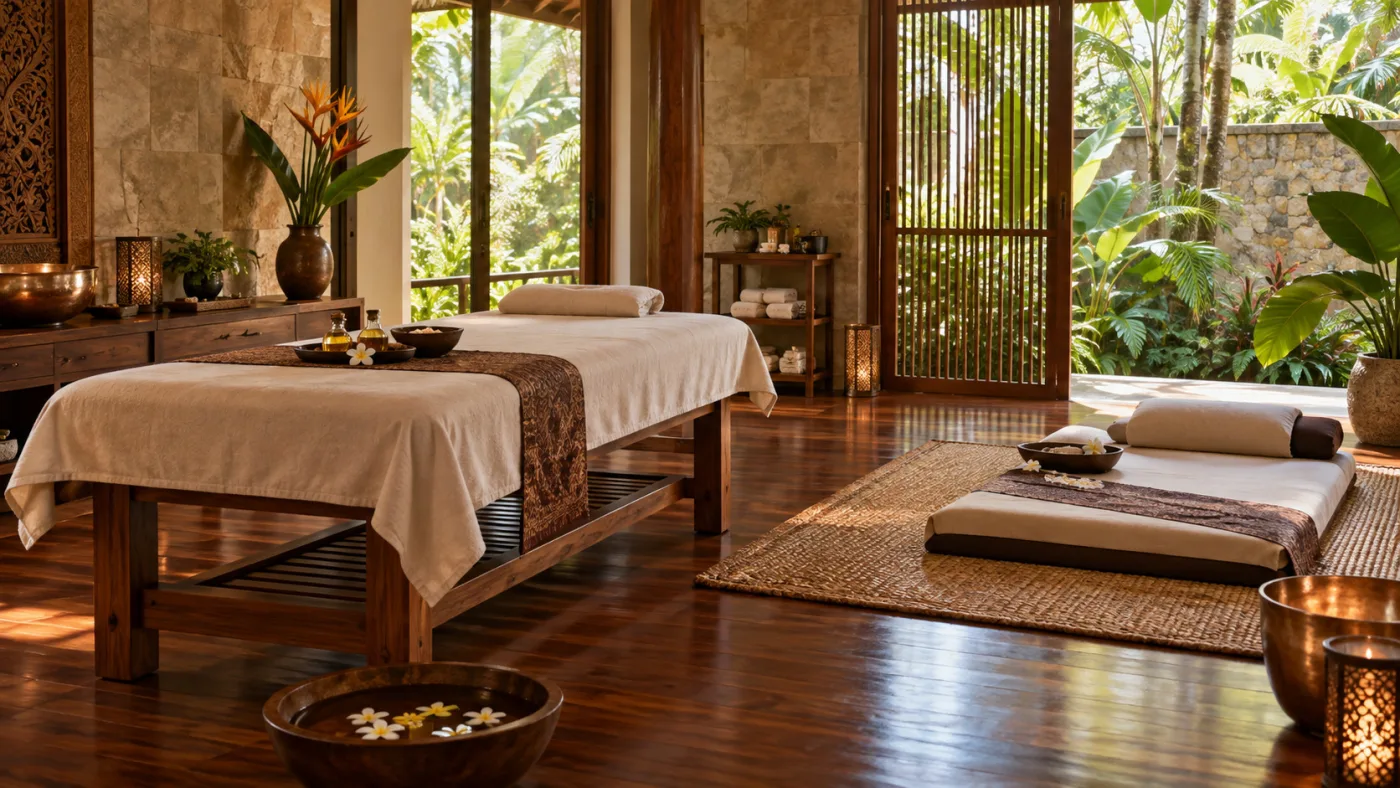
They sit side by side on spa menus and both come from the Far East. That is why they are often confused — yet what you experience in a session is almost entirely different.
The short answer
If you want to relax, doze off and enjoy the comfort of warm oil, choose Balinese massage. If you want to stretch, loosen up and feel lighter after the session, choose Thai massage.
The key differences
| Balinese massage | Thai massage | |
|---|---|---|
| Clothing | You undress and are covered with a sheet | You stay clothed |
| Oil | Warm plant oil | None used |
| Surface | Table | Floor mat |
| Technique | Gliding strokes, kneading, acupressure | Stretching, joint mobilisation, point pressure |
| Pace | Flowing and continuous | Stop-start, moving from position to position |
| After the session | Oil stays on the skin; a shower is recommended | No shower needed |
Balinese massage: closer to relaxation
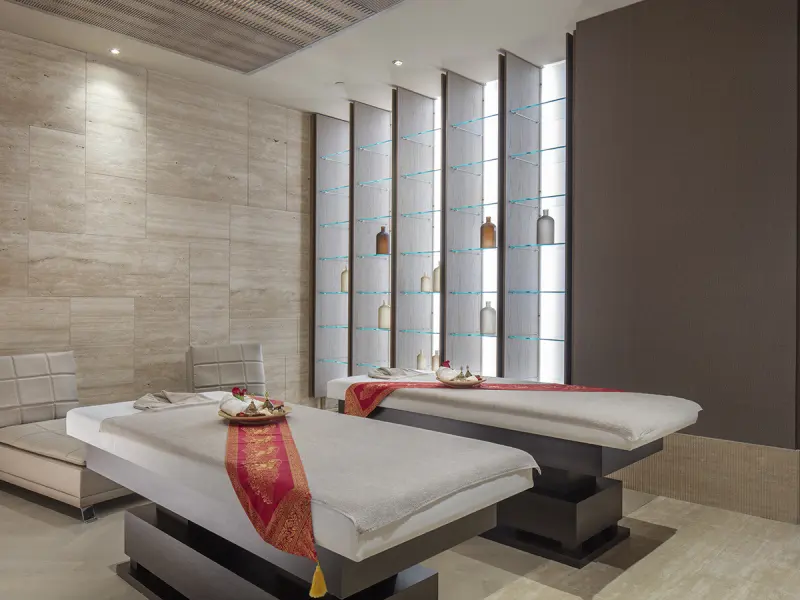
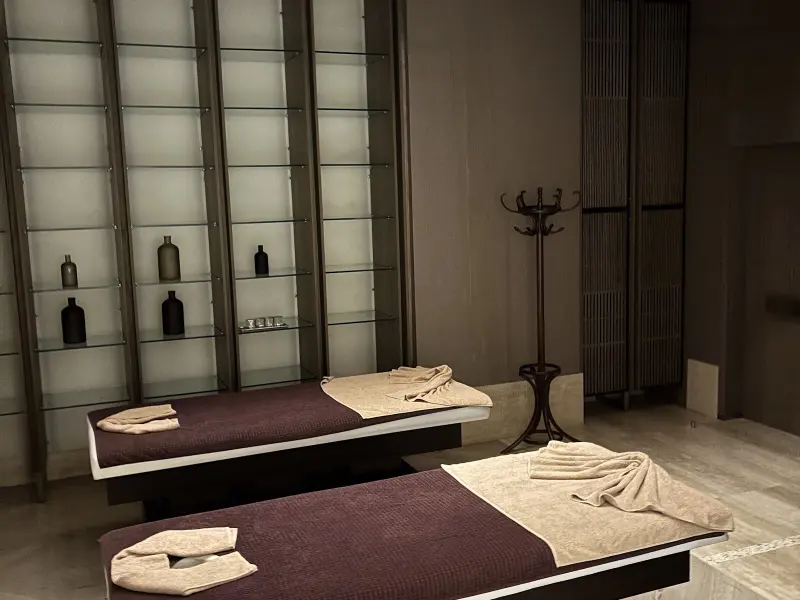
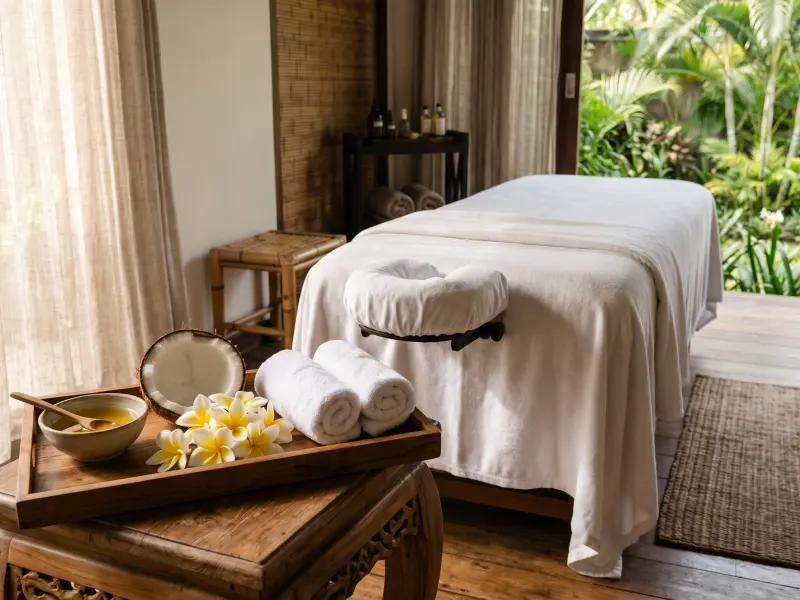
Balinese massage is done with warm oil on a table. The therapist works with long gliding strokes and kneading, using the palms, thumbs and forearms. The pressure is between medium and deep and can be adjusted during the session.
You lie still throughout the session. Most people doze off at some point — that is to be expected. The oil is usually coconut, jasmine or frangipani-based, so an aromatherapy element is an integral part of the session.
Good for: desk-job tension, general stress, tiredness after a long journey. The right middle ground for people who find a classic Swedish massage too light but are wary of deep tissue massage.
Thai massage: closer to movement
Thai massage is done without oil and fully clothed, on a floor mat instead of a table. The therapist guides you, stretching your arms, legs and torso into positions similar to passive yoga. This is accompanied by point pressure applied with the thumbs, elbows, knees and feet.
You do not stay still during the session, and you usually do not doze off. As it is often described, it is "lazy yoga" — the therapist does the work, but your body is working.
Good for: stiffness, restricted movement, hip and hamstring tightness from sitting for long periods, and the flexibility needs of people who exercise regularly.
Which one is firmer?
That is the wrong question. Both involve noticeable pressure, but in different ways: in Balinese massage the pressure goes down onto the muscle, while in Thai massage tension is created across the joints and along the length of the muscles. If you are looking for the intensity of a deep tissue massage, neither is a true equivalent.
If it is your first massage
Balinese massage is a safer place to start. The stretches in Thai massage can feel unfamiliar, and it is hard to relax in those positions without knowing what to expect. You can also read our guide to your first massage.
Who they are not suitable for
Thai massage may be inadvisable with osteoporosis, a herniated disc, a recent fracture, a joint replacement or advanced varicose veins — the stretching movements put strain on the body. Balinese massage requires a doctor's approval with advanced varicose veins, a history of deep vein thrombosis or uncontrolled blood pressure. Neither is recommended during pregnancy; at that stage, pregnancy massage is a separate treatment.
You can find detailed health warnings for both massages on their own pages.
Where to find them
Balinese massage is far more common on spa menus in Turkey. Thai massage requires separate training and a different room set-up, so fewer venues offer it — and not every place with "Thai massage" on its menu offers the traditional practice.
Ask before booking an appointment: Is the session done on a mat or a table, is oil used, and has the therapist been trained in Thai massage? These three questions make the difference clear.
You can browse venues offering Balinese massage and venues offering Thai massage in our guide.
This article was written by the Spa Deneyimi editors. Rankings and verification badges cannot be bought.