A single round in a sauna usually lasts 8-15 minutes; 5-10 minutes is enough for first-timers, and you should not go over 20 minutes in one go. A traditional Finnish sauna runs at 70-100 °C with low humidity; bio saunas and infrared saunas are around 45-60 °C. The classic routine is 2-3 rounds with cooling down and rest in between.
Below you will find the kinds of sauna, a temperature and time table, how rounds work, how many times a week you can go, sauna etiquette and who should consult a doctor first.
How many minutes should you stay in a sauna?
The short answer to how long to stay in a sauna is 8-15 minutes per round. In research, Finnish sauna sessions usually last 5-20 minutes; Harvard Health also advises staying in for no more than 15-20 minutes at a time.
- First-timers: 5-10 minutes, on the bottom bench
- Regular users: 10-15 minutes
- Maximum per round: 20 minutes
When it comes to how long you should stay, the clock only sets an upper limit. Dizziness, nausea, palpitations, a headache or an oppressive feeling of heat mean you should get out before the time is up. If you want more heat, rather than staying in longer, go in for a new round after cooling down and resting.
How hot is a sauna?
A traditional Finnish sauna runs at 70-100 °C; the range most often used in research is 80-90 °C. Humidity is around 10-20% and rises briefly when water is thrown on the hot stones. Because sweat can evaporate in dry air, the body can cool itself; this is why an 80 °C sauna can feel easier to bear than a 45 °C steam room.
If you are wondering how hot a sauna should be, look at the bench you sit on rather than the thermostat. Because hot air rises, the top bench is the hottest place and the bottom bench the coolest. If it is your first time, start on the bottom bench.
| Type | Temperature | Humidity | Time per round |
|---|---|---|---|
| Finnish sauna | 70-100 °C | 10-20% | 8-15 min (first time 5-10) |
| Bio sauna (soft sauna) | about 50-60 °C | 40-55% | 10-15 min |
| Infrared sauna | 45-60 °C | low, no water thrown | 10-20 min |
| Steam room (for comparison) | 40-50 °C | close to 100% | 10-15 min (first time 5-10) |
Values vary from venue to venue; the thermometer at the door and the venue's rules come first.
The difference between Finnish, bio and infrared saunas
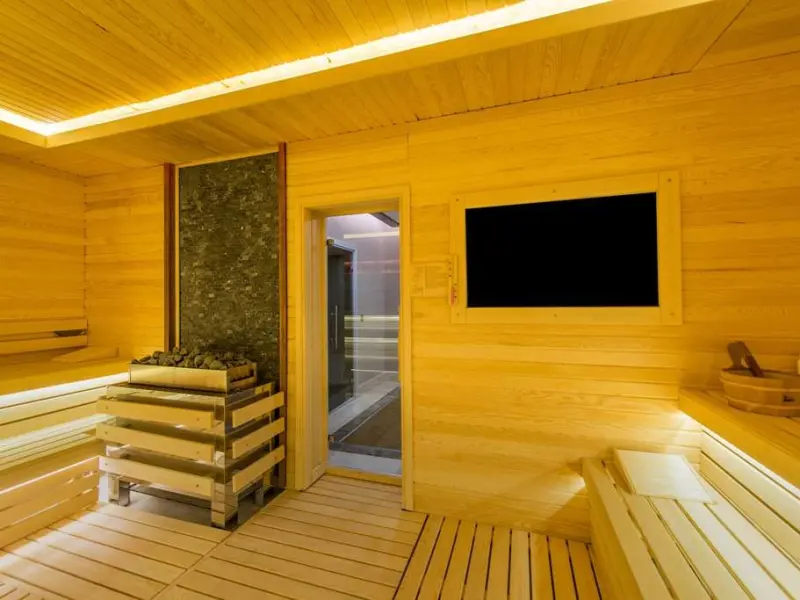
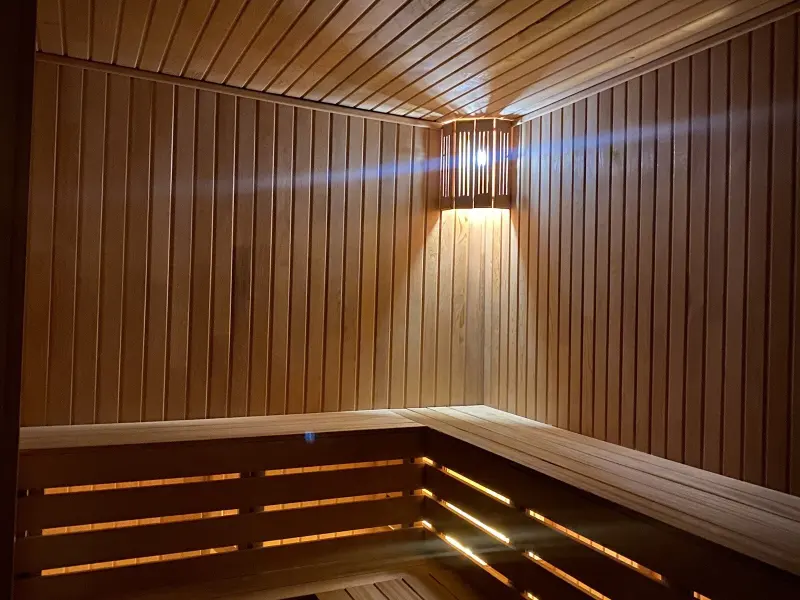
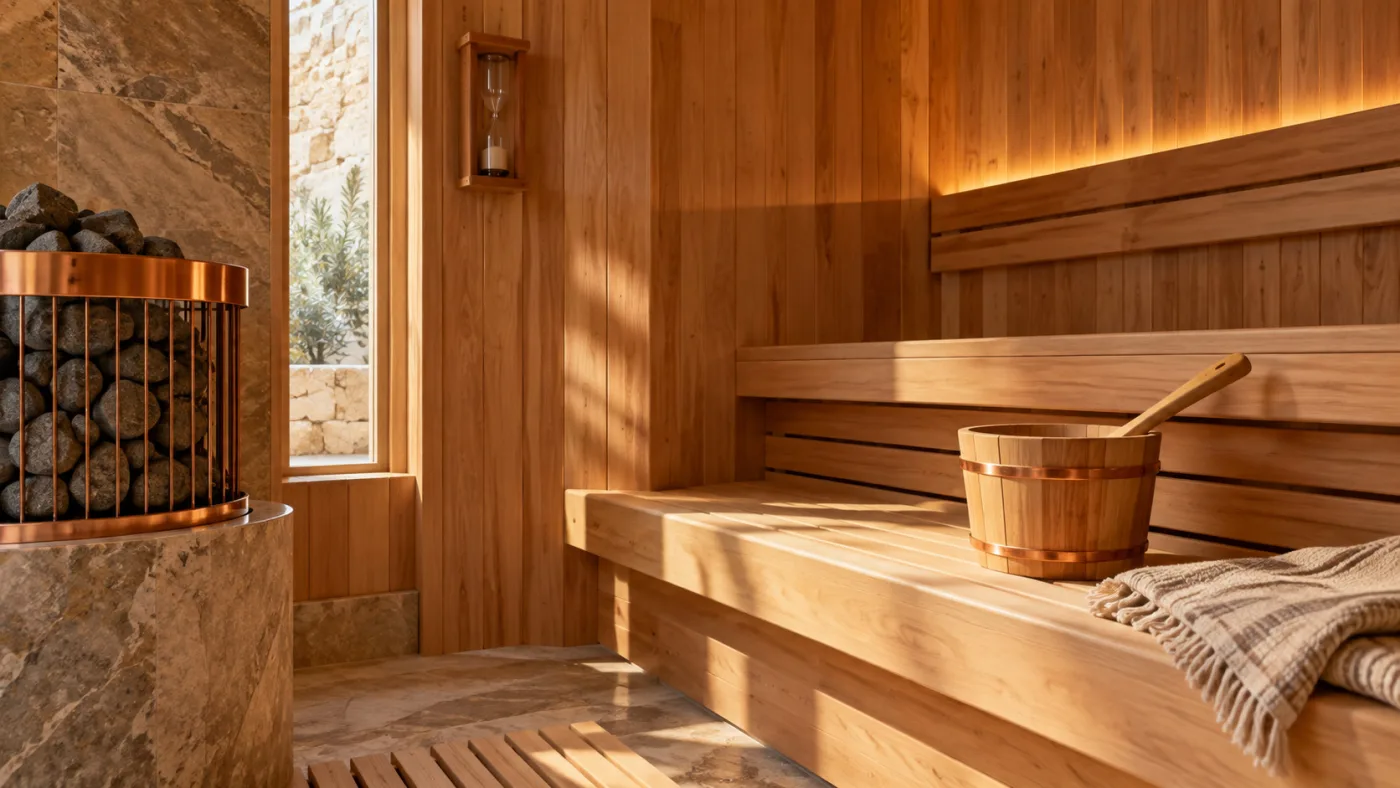
A Finnish sauna is a wooden room in which a stove heats stones that heat the air. When water is ladled onto the stones, the steam it produces (löyly in Finnish) suddenly raises the feeling of heat. This is the sauna you will most often find in hotel spas and in the wet areas of hammams in Turkey; many hotel spas, such as Radisson Blu Hotel Ordu, offer a Finnish sauna together with a hammam and a steam room.
A bio sauna (soft sauna) is a version of the same wooden room that runs at a lower temperature and higher humidity. Because the temperature is around 55 °C, no water is thrown on the stones; essential oils are usually used instead. It is a good starting point for people who find high heat hard.
An infrared sauna heats the body directly with radiation from panels rather than heating the air; this is why it makes you sweat even at 45-60 °C. According to Mayo Clinic, because it produces effects similar to moderate exercise at a lower temperature than a classic sauna, it is an option for people who struggle to tolerate heat; larger studies are needed to prove its possible benefits.
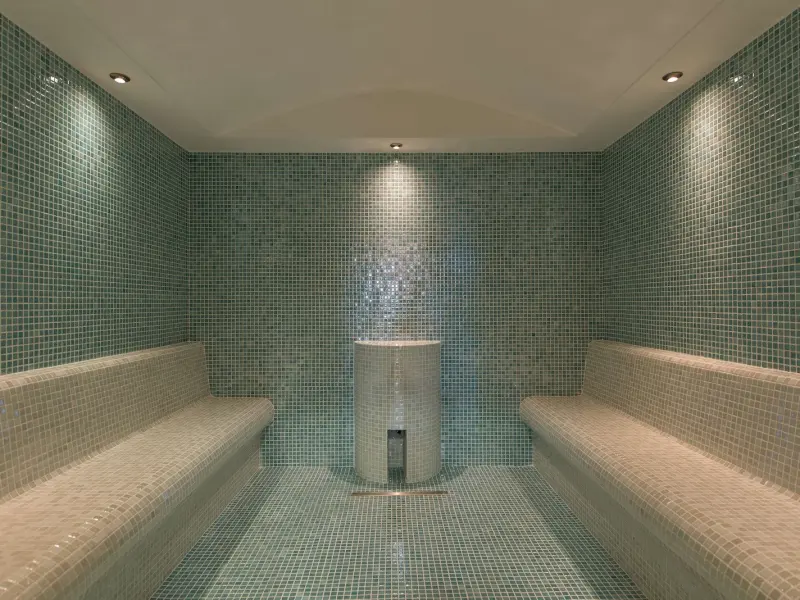
A steam room, on the other hand, is not a sauna: it runs at 40-50 °C but with humidity close to 100%, and because sweat cannot evaporate it can feel stifling despite the lower temperature. We explain the differences in our steam room guide, and the comparison with the hammam in the article hammam or sauna.
How many rounds should you do, and how do you cool down?
People usually do 2-3 rounds in a sauna, and each round has three steps:
- Warming up: 8-15 minutes in the sauna
- Cooling down: a few minutes under a cold shower, in a cold pool, in a snow room or in the open air
- Resting: 10-15 minutes sitting or lying down; drink water during this time
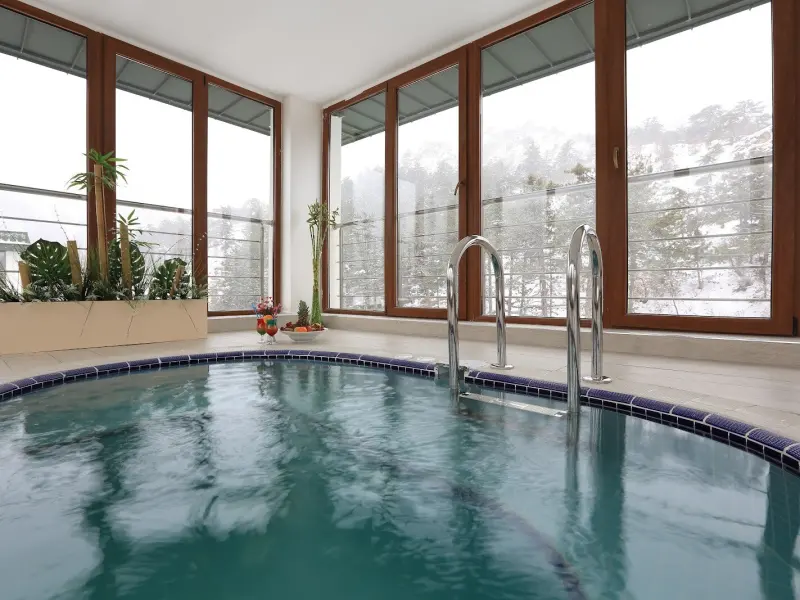
Start cooling down with your feet and arms and work towards your torso; Harvard Health also recommends cooling down gradually after a sauna. Some venues, such as O'Wellness Yalıkavak in Bodrum, offer a cold plunge pool next to the sauna. People with heart disease should not get into ice water or a cold pool; Brown University Health notes that sudden cold can cause arrhythmia and swings in blood pressure and heart rate.
Going back in between rounds without cooling down is the most common mistake. Three rounds, including rest, take roughly an hour to an hour and a half. If you will use the sauna on the same visit as a hammam, steam room and pool, we explain separately which order to use the wet areas in.
How to use a sauna step by step
These are the steps for anyone using a sauna for the first time:
- Get ready. Wait at least an hour after a heavy meal, don't drink alcohol and drink water beforehand.
- Shower and dry off. Showering is a hygiene rule; dry skin sweats more quickly.
- Take off your jewellery. Metal heats up and can burn the skin; the same goes for metal-framed glasses.
- Spread out your towel. Everything you sit or lie on, including your feet, should be on the towel.
- Start on the bottom bench. If you feel comfortable, you can move up to a higher bench.
- Get out after 8-15 minutes, or sooner if you feel unwell. If you were lying down, sit for a minute before getting out; standing up suddenly can make you dizzy.
- Cool down and rest, then go in for a new round if you like.
- After the last round, take a lukewarm shower and rest until your body is back to normal. Harvard Health recommends drinking two to four glasses of cool water after each sauna. Don't go straight outside with wet hair, especially in winter.
How many times a week can you use a sauna?
The sources give no limit on how many times a week you can use a sauna that applies to everyone; in Finland it is normal to go to the sauna several times a week. In a study that followed 2,315 middle-aged men in eastern Finland for about 20 years, most participants used the sauna 2-3 times a week, and among those who went 4-7 times a week there were fewer cardiovascular deaths than among those who went once a week. This is an observational study: it does not prove that the sauna made the difference, and it covers men only.
If you are just starting out, one or two visits a week is a sensible start. Even if you go more often, the rules for each visit stay the same: 2-3 rounds, no more than 15-20 minutes per round and cooling down in between.
Sauna etiquette and common mistakes
In a shared sauna, these rules apply almost everywhere:
- Sit on a towel and make sure your sweat does not touch the wood.
- Keep quiet. In most venues the sauna is a place to rest; leave your phone outside.
- Ask before throwing water on the stones. Throwing water raises the feeling of heat for everyone; in some venues only staff do this.
- Find out the dress code in advance. In mixed saunas a swimsuit or towel is usually expected; you can find the details in our article on what to wear in a hammam and spa.
- Don't scrub, exfoliate or shave in the sauna; these belong in the shower and the hammam.
Common mistakes:
- Pushing the time and going over 20 minutes in one round
- Going back in between rounds without cooling down
- Going in after drinking alcohol: the Finnish Sauna Society notes that people who die in the sauna are typically drunk
- Not replacing the water lost through sweat
- Thinking of the sauna as a way to lose weight: the difference on the scales is water, and it comes back as you drink
- Going in when ill, feverish or run down
Who should consult a doctor before using a sauna?
In a sauna the body is put under a load similar to moderate exercise. Consult your doctor before using a sauna in the following situations:
- Cardiovascular disease: Brown University Health lists unstable angina (chest pain), decompensated heart failure, severe aortic stenosis and a heart attack within the past two weeks among the conditions in which saunas should be avoided.
- Blood pressure: uncontrolled high blood pressure and low blood pressure.
- Medication: the Finnish Sauna Society notes that blood-pressure-lowering drugs such as beta blockers can lower blood pressure, particularly after the sauna, and cause dizziness. Harvard Health also warns against medications that impair sweating.
- Pregnancy: get your doctor's approval for saunas and hot environments; our guide to massage and spa in pregnancy covers this in detail.
- Skin conditions: if you have a skin condition such as eczema or psoriasis, or an open wound, ask your doctor first.
- Fever and acute infection: don't use the sauna during this time.
For children the rule depends on the venue; Richmond Nua Wellness-Spa in Sapanca, for example, is open to guests over 14. In Finland children are taken into the sauna at a young age, but in the research reported by the Finnish Sauna Society babies stayed in the hot room for less than five minutes, and it stresses that children need constant adult supervision. This article is not a substitute for medical advice.
Frequently asked questions
What is the longest you should stay in a sauna?
15-20 minutes per round is the upper limit. If it is your first time, get out after 5-10 minutes; if you feel unwell, don't wait for the time to be up.
How hot should a sauna be?
70-100 °C is the normal range for a Finnish sauna; research most often uses 80-90 °C. Bio saunas and infrared saunas run at around 45-60 °C.
How long should you stay in an infrared sauna?
Usually 10-20 minutes. Research also includes infrared sauna sessions of up to 30 minutes, but these were carried out under supervision.
Should you shower after a sauna?
Yes. The cold or cool shower between rounds is the cooling-down step; after the last round, wash off the sweat with a lukewarm shower and rest.
Should you drink water in a sauna?
Drink water before going in and between rounds; two to four glasses of cool water are recommended after each sauna. Avoid alcoholic drinks.
Sources
- Hussain J., Cohen M. Clinical Effects of Regular Dry Sauna Bathing: A Systematic Review (2018), checked October 2026
- Laukkanen T. et al. Association Between Sauna Bathing and Fatal Cardiovascular and All-Cause Mortality Events, JAMA Internal Medicine (2015), checked October 2026
- Harvard Health: Sauna health benefits, checked October 2026
- Brown University Health: Saunas and your heart, checked October 2026
- Mayo Clinic: Do infrared saunas have any health benefits? (published by Koç University Hospital), checked October 2026
- Finnish Sauna Society: Sauna and health effects, checked October 2026
- Finnish Sauna Society: A child in the sauna, checked October 2026
- Hotel Adlon Kempinski: sauna and bio sauna temperature and humidity values, checked October 2026
This article was written by the Spa Deneyimi editors. Rankings and verification badges cannot be bought.