

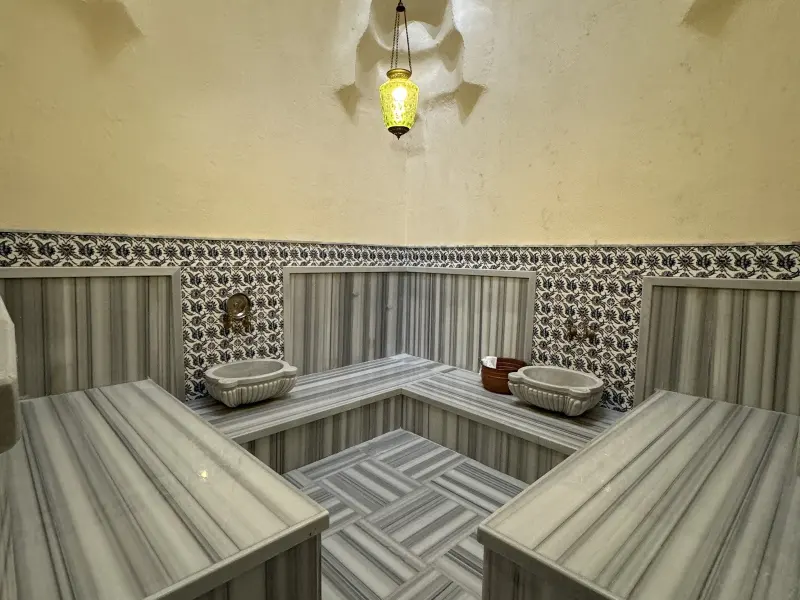
Closed · opens today at 09:00 Separate sections
Separate sections
Turkish BathTraditional Hammam Ritual +1

5 venues without a price are not shown.
3 venues found
Closed · opens today at 09:00 Separate sections
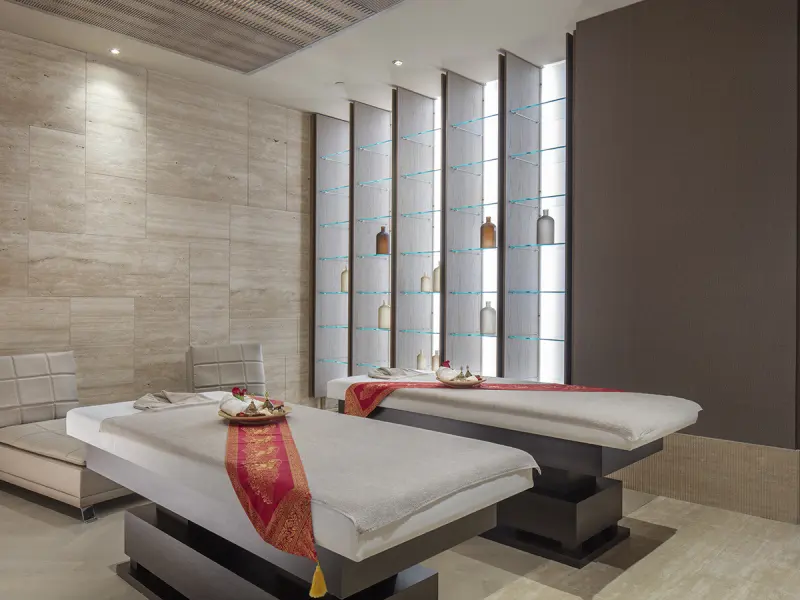
Closed · opens today at 07:00 Mixed
from₺1,250 · ≈ €23
Closed · opens today at 10:00
The recommended order is based on rating and number of reviews, and on how complete and up to date a listing is. A paid membership does not change the order.
The map couldn't be loaded
Foot and leg massage is a localised massage that works the muscles of the sole of the foot, the ankle, the calf and the thigh. It is offered as a short session to ease the tiredness and heaviness that come from standing, walking or sitting still for long periods. The movements start at the foot and travel towards the heart, that is, from the bottom upwards.
Foot and leg massage is mostly done lying face up, with a support placed under the knees. The therapist works the sole of the foot by pressing and rubbing with the thumbs, and gently stretches the toes and ankle. Oil or cream is then applied to the calf and thigh; long strokes are made from the ankle to the knee and from the knee to the hip. This direction matches the direction in which blood in the veins returns to the heart. No deep pressure is applied to the back of the knee or the groin area; you may turn face down briefly so that the back of the calf can be worked.
Foot and leg massage usually lasts 20-45 minutes. It can be taken on its own and is also offered as a short add-on after a hammam, sauna or pedicure. If you have tension in your back as well as your legs, a full-body massage may be more suitable; if you are looking for a short session for the hands, feet and head, hand, foot and head massage is also an option.
Foot and leg massage is chosen by people who work on their feet all day, those back from a long walk or a city tour, and those who have just finished a long flight or coach journey. It may help reduce the feeling of tiredness in the muscles and temporarily increase circulation in the area. If you want more targeted work after regular sport such as running, sports massage is worth considering.
Because of vein health, the legs are one of the areas that need the most care in massage. In the following cases foot and leg massage is not given, or a doctor's approval is needed first:
Because the risk of thrombosis rises in pregnancy, leg massage should only be done with a doctor's approval and by a therapist trained to work with pregnant clients; pregnancy massage is designed for this period.
Foot and leg massage is most often confused with reflexology. Reflexology is based on applying systematic, steady pressure to specific points on the sole of the foot and is done clothed; foot and leg massage, by contrast, works the muscles, including the calf and thigh, with oil, stroking and kneading. If the feeling of swelling in the legs is your main concern, lymphatic drainage massage, done with very light pressure, is another option. A spa pedicure may also include a short foot massage, but its focus is care of the nails and the skin of the feet.
When making an appointment for foot and leg massage, asking the following makes it easier to choose the right session:
With mild varicose veins it can be done with gentle movements and without pressure on the veins; with advanced varicose veins a doctor's approval is needed first. If a vein is raised, painful, hardened or red, do not have a massage; this may be a sign of vein inflammation or a clot. Tell the therapist about your varicose veins when making your appointment.
It is suitable for most people and may help ease the heaviness that comes with travel. However, because sitting still for long periods raises the risk of thrombosis, if you notice swelling, pain or warmth in one leg after the journey, see a doctor instead of having a massage. A short walk and drinking water after the journey will also relieve your legs.
Yes, some venues offer the two treatments one after the other. If nail polish is to be applied, the massage should be done before the polish and the nails cleaned of oil; otherwise the polish may not hold well. If there is a fungal infection or a wound on the foot, both treatments should be postponed.
It may help reduce the feeling of tiredness in the soles and calves and leave a temporary feeling of lightness in the legs. The effect is not permanent; suitable shoes, regular breaks and simple stretches together ease the strain of working on your feet. If you have constant foot or heel pain, see a doctor to find out the cause.
Yes, they can. The tickling sensation mostly comes from a light, hesitant touch; asking the therapist for steadier, more definite pressure usually reduces it. If the soles of your feet are very sensitive, you can also ask for the session to focus more on the calves and thighs.

Are you sure?
Choose one more venue to compare.