Istanbul's historic hammams are the richest living examples of classical Ottoman hammam architecture still in use today. Some of the hammams built between the 15th and 18th centuries on the historic peninsula and in Beyoğlu are working as hammams again after restoration. Below you will find the eight best known, with their districts, construction dates and the people who commissioned them. After that we explain what sets a historic hammam apart from an ordinary one and what you need to know before you go.
Istanbul's historic hammams at a glance
| Hammam | District | Built | Commissioned by / architect |
|---|---|---|---|
| Galatasaray Hamamı | Beyoğlu | 1481 | Bayezid II |
| Zeyrek Çinili Hamam | Fatih (Zeyrek) | 16th century | Barbaros Hayreddin Paşa / Mimar Sinan |
| Ayasofya Hürrem Sultan Hamamı | Fatih (Sultanahmet) | 1556-1557 | In the name of Hürrem Sultan / Mimar Sinan |
| Süleymaniye Hamamı | Fatih (Süleymaniye) | 1557 | Süleyman the Magnificent / Mimar Sinan |
| Kılıç Ali Paşa Hamamı | Beyoğlu (Tophane) | 1580-1583 | Kılıç Ali Paşa / Mimar Sinan |
| Çemberlitaş Hamamı | Fatih (Çemberlitaş) | 1584 | Nurbanu Sultan / attributed to Mimar Sinan |
| Cağaloğlu Hamamı | Fatih (Cağaloğlu) | 1741 | Mahmud I |
| Beylerbeyi Hamamı | Üsküdar (Beylerbeyi) | 1778 | Abdülhamid I / Mehmet Tahir Ağa |
The hammams one by one
Galatasaray Hamamı (Beyoğlu, 1481)
It was built as part of the Galata Sarayı complex founded by Bayezid II in 1481. For a long time it served the students of the palace school; it opened to the public in 1834 and took on its present appearance in a 1964 renovation. It stands on Turnacıbaşı Caddesi, a few minutes from İstiklal Caddesi. Opening hours, services and contact details are on the Galatasaray Hamamı profile.
Zeyrek Çinili Hamam (Fatih, Zeyrek)
A double hammam with two separate sections for women and men, commissioned from Mimar Sinan by the Grand Admiral Barbaros Hayreddin Paşa. It takes its name ("çinili" means tiled) from the tiles that cover its walls. The 13-year restoration turned into something close to an excavation: around 3,000 tiles and 37 different patterns were brought to light. The hammam opened to visitors in May 2024. Today the building houses museum and exhibition spaces as well as the hammam.
Ayasofya Hürrem Sultan Hamamı (Sultanahmet, 1556-1557)
A double hammam built by Mimar Sinan in the name of Hürrem Sultan, between Hagia Sophia (Ayasofya) and the Sultanahmet Mosque. It is known as the only Ottoman hammam in which the women's and men's sections are laid out one after the other on the same axis. After a restoration that began in 2008, it reopened as a hammam in 2011.
Süleymaniye Hamamı (Fatih, 1557)
It is part of the Süleymaniye complex: Süleyman the Magnificent commissioned it and Mimar Sinan designed it. Because workers from the nearby foundries used it so often, it was for a time also known as the blacksmiths' hammam. Today it is one of the few historic hammams that women and men can enter together, which is why couples and families often choose it.
Kılıç Ali Paşa Hamamı (Tophane, 1580-1583)
The Grand Admiral Kılıç Ali Paşa had Mimar Sinan build it next to his mosque. It was founded both to serve sailors and to bring in income for his charitable foundation. With its single dome and star-shaped hot room, it is one of the works of Sinan's mature period. After a long restoration it is in use as a hammam once again.
Çemberlitaş Hamamı (Fatih, 1584)
It stands on Divanyolu, right next to the Çemberlitaş column (the Column of Constantine). It was commissioned by Nurbanu Sultan, the wife of Selim II. Its architect is generally named as Mimar Sinan. The hammam's income was set aside for the running costs of Nurbanu Sultan's Atik Valide complex in Üsküdar. It is a classic double hammam, with the women's and men's sections set symmetrically side by side.
Cağaloğlu Hamamı (Fatih, 1741)
Sultan Mahmud I built it to provide income for the library he founded at Hagia Sophia. The inscription over its door gives the Hijri date 1154 (1741). It is one of the last large public hammams built in Istanbul in the Ottoman period and counts among the city's largest double hammams.
On the Asian side: Beylerbeyi Hamamı (Üsküdar, 1778)
Abdülhamid I had it built in 1778 in the name of Rabia Sultan. Its architect was Mehmet Tahir Ağa. It stands on Yalıboyu Caddesi, south of the Beylerbeyi Mosque. The building was put up for sale in 2022. Check whether it is operating as a hammam before you go.
What is a historic hammam, and how does it differ from an ordinary one?
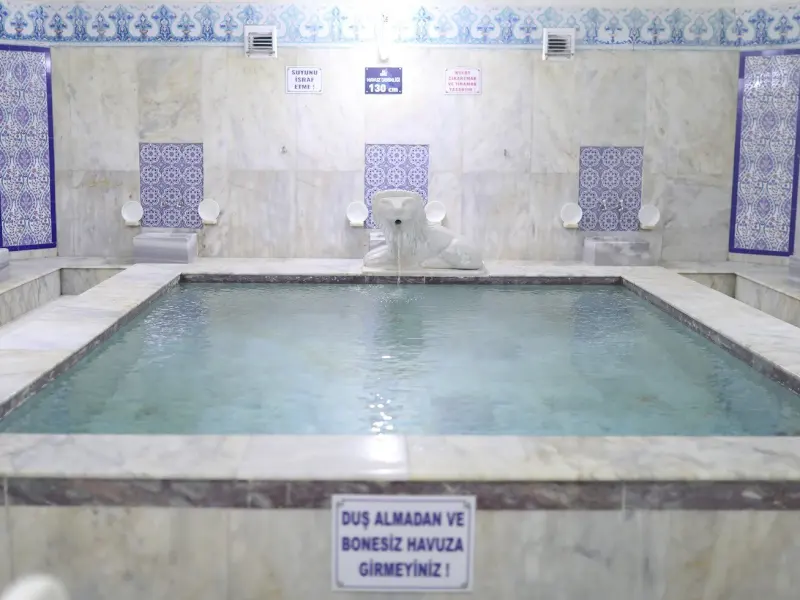
A historic hammam is a building constructed to the architectural plan of its period that keeps the trio of changing room, warm room and hot room. Its age is not the only difference:
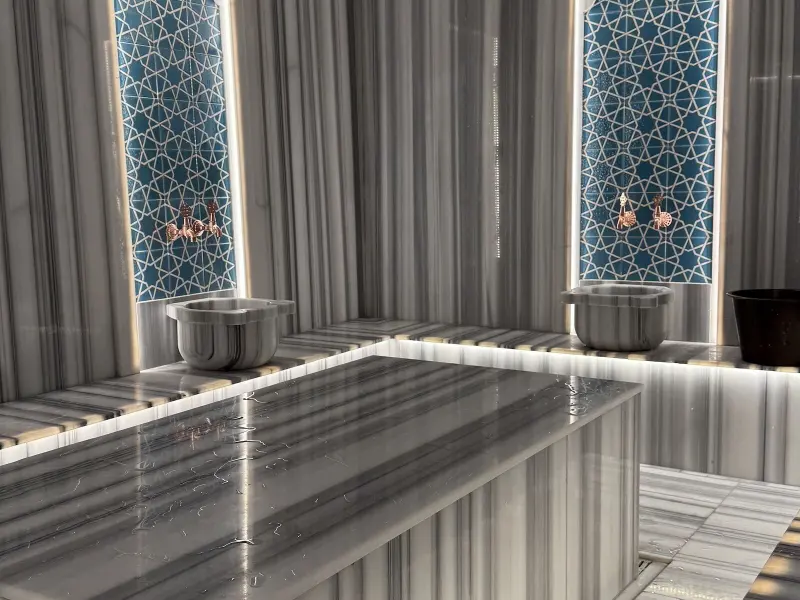
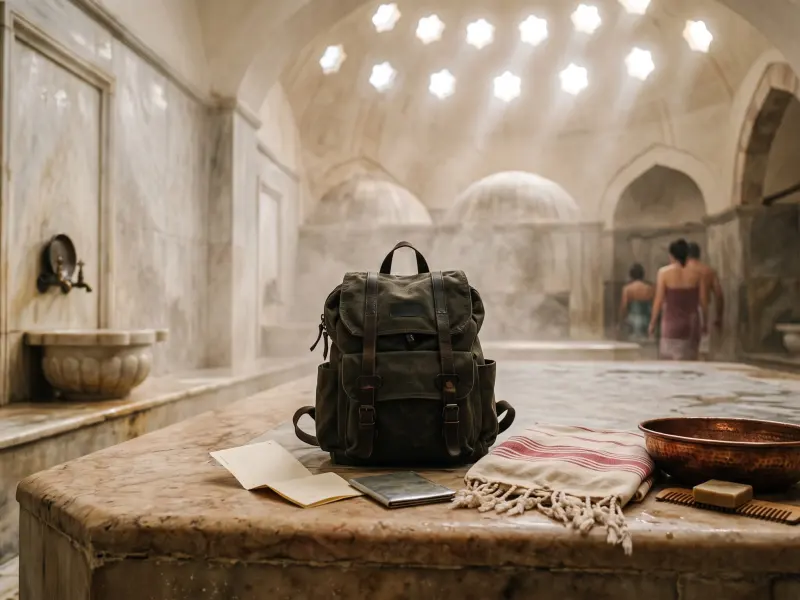
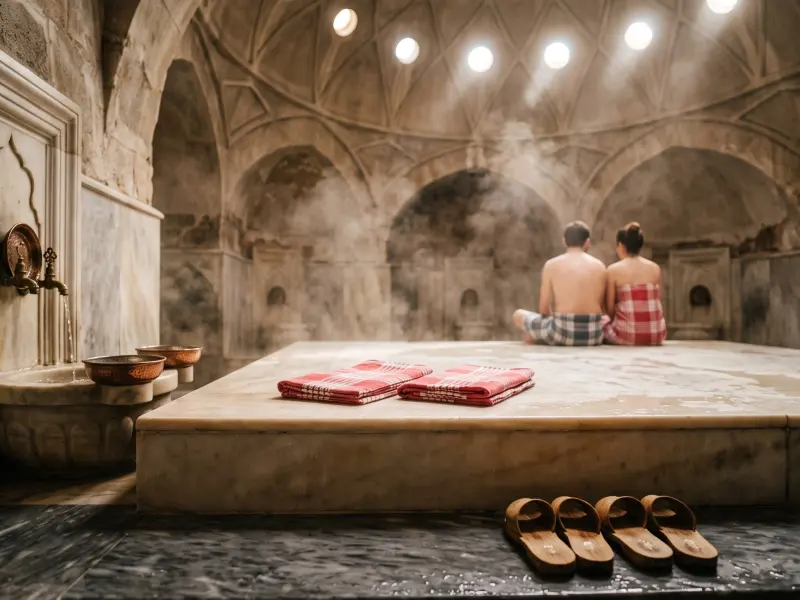
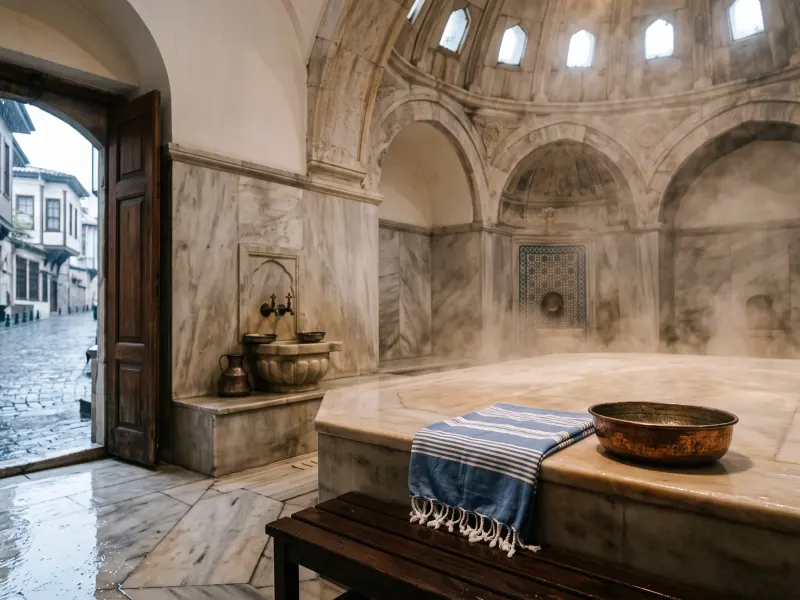
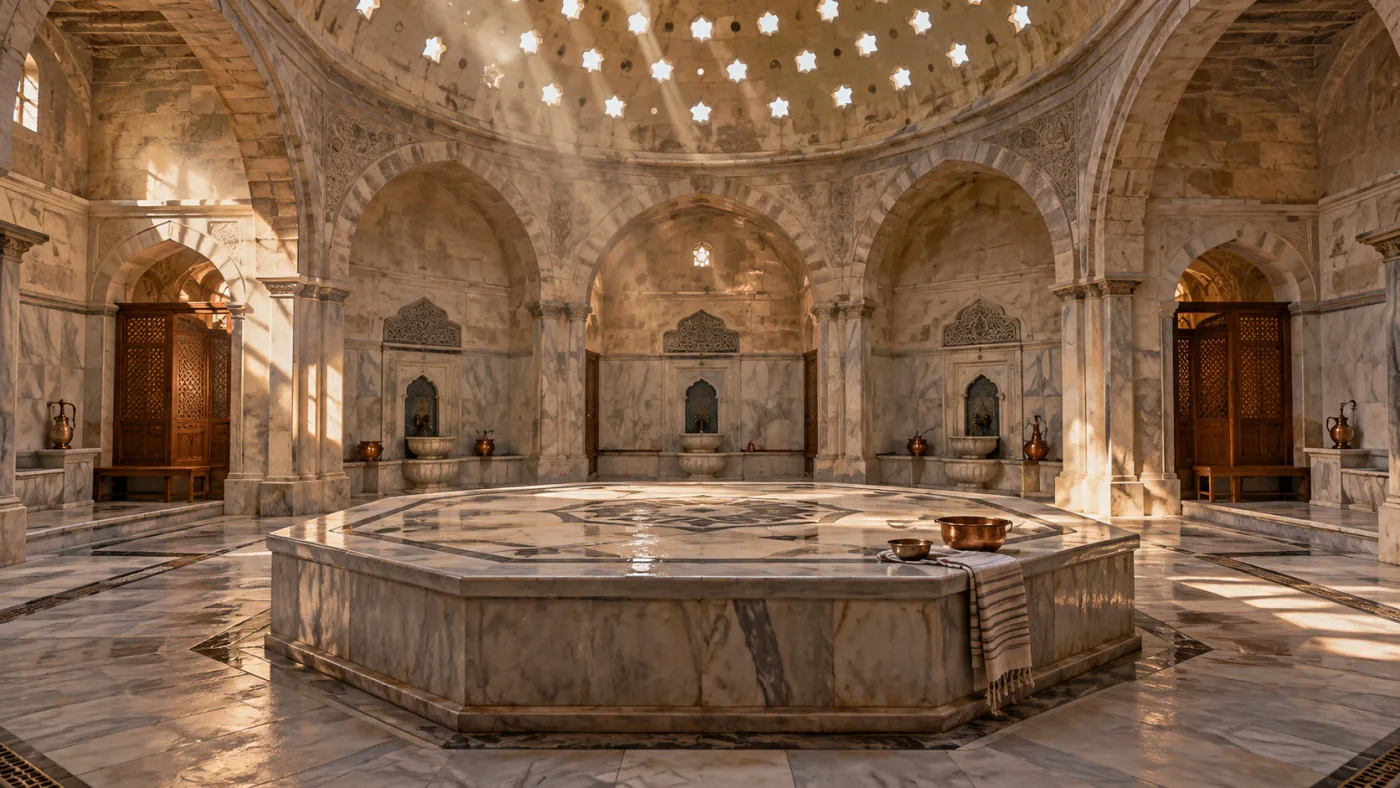
- Dome and skylights. The small glass skylights (known as "elephant's eyes") in the dome of the hot room let daylight filter in. It creates an atmosphere that artificial lighting cannot.
- Marble craftsmanship. The basins and the navel stone (the heated marble platform) are usually carved from a single piece of marble.
- Heat distribution. The underfloor heating system, known as the cehennemlik, warms the floor evenly.
- Double hammam layout. Most large historic hammams were built with two separate sections, for women and for men. Çemberlitaş, Cağaloğlu and Ayasofya Hürrem Sultan are well-known examples.
Before you visit
Booking. You can walk into most historic hammams without an appointment; even so, phoning a few days ahead at weekends and in high season saves you a wait. Some, such as Kılıç Ali Paşa, work by reservation.
Women and men. Some are double hammams (two separate sections), some divide a single section into time slots during the day, and a few, such as Süleymaniye, are mixed. Check before you go. Every profile in the guide includes this information.
Price range. Historic hammams are usually more expensive than ordinary city hammams. The cost of restoration and upkeep is the main reason. Packages vary according to the combination of kese (exfoliating scrub), foam wash and massage. For current prices, see Istanbul hammam prices 2026.
Photography. Most venues do not allow photography in the hot room, out of respect for other guests' privacy.
If it is your first visit, our guides on how to use a hammam, how to tie a peshtemal and what to take to the hammam will make things easier.
Which districts are they in?
The historic hammams are concentrated mainly around Fatih (Sultanahmet, Çemberlitaş, Cağaloğlu, Süleymaniye and Zeyrek) and Beyoğlu (Galatasaray, Tophane). On the Asian side there are examples in Üsküdar too.
Because these buildings were mostly built as part of mosque complexes or to bring in income for a charitable foundation, it is no surprise to find a hammam near a mosque on the historic peninsula. From Sultanahmet you can walk to the Ayasofya Hürrem Sultan, Çemberlitaş and Cağaloğlu hammams in a few minutes.
Istanbul hammams on Spa Deneyimi
On Spa Deneyimi, every venue's profile shows its opening hours, list of services and contact details. Rankings cannot be bought.
If you are curious about the ritual itself, see what is a Turkish bath; for practical questions, see how long does a hammam take.
Sources
This article was written by the Spa Deneyimi editors. Rankings and verification badges cannot be bought.