
Closed · opens today at 12:00
Turkish BathTraditional Hammam RitualKese Scrub

73 venues without a price are not shown.
14 venues found
Closed · opens today at 12:00
Closed · opens today at 11:00

Separate sections

Separate hours

Separate hours


Closed · opens today at 10:00

Closed · opens today at 10:00

Closed · opens today at 10:00

Closed · opens today at 10:00

Closed · opens today at 10:00

Closed · opens today at 10:00
The recommended order is based on rating and number of reviews, and on how complete and up to date a listing is. A paid membership does not change the order.
The map couldn't be loaded
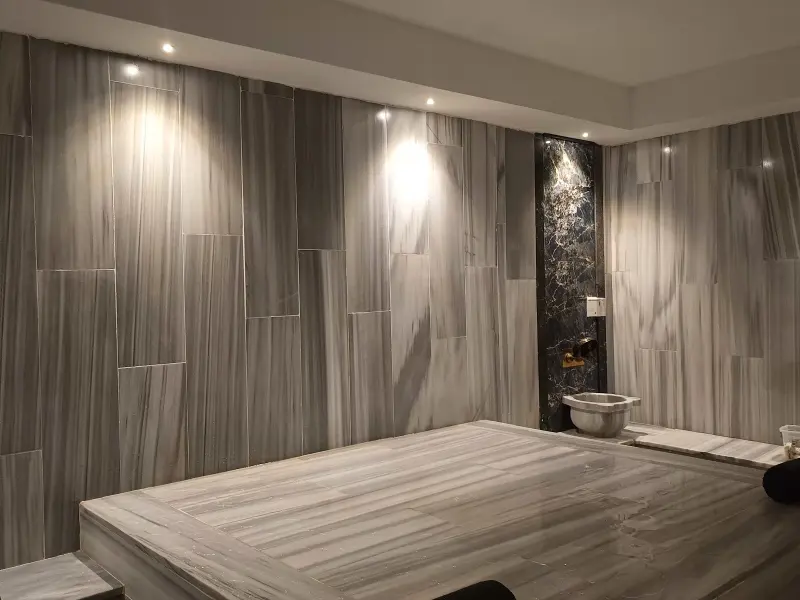
A steam room (also called a steam bath) is an enclosed room where the temperature is 40-50 °C and the humidity close to 100%. Because steam is produced continuously, visibility is short and the surfaces are wet. The walls are usually lined with marble or tiles; wood is not used in this humidity.
At most facilities the steam room is not offered on its own; it is one station of the wet area, together with the hammam, sauna and pool. Most of the listed venues are hotel spas; steam rooms are also found in thermal hotels, day spas and some fitness clubs.
The same cycle as in the sauna applies in the steam room: steam room, cooling down, rest. In practice it goes like this:
The cycle can be repeated 2-3 times. After the steam room, starting with a lukewarm shower rather than getting straight into cold water is safer, especially for those prone to swings in blood pressure. Healthy adults can use the steam room several times a week; the fluid lost each time needs to be replaced. Not all of the moisture on your skin is sweat; some of the steam condenses on the cooler surface of the skin. Some facilities add essences such as eucalyptus to the steam; if you are sensitive to scents, ask beforehand.
The humid air of the steam room is found soothing for the airways; some people choose it for a blocked nose and seasonal complaints. This relief is temporary and does not treat any illness. Because humidity does not dry out the skin, people with dry skin find the steam room more comfortable than the sauna. As hot, humid air softens the top layer of the skin, the steam room is also used as a preparation station before a kese (exfoliating scrub) or a facial. The weight lost through sweating is water and comes back once you drink.
The main difference between the steam room and the sauna is humidity. The sauna is dry heat at 70-100 °C, whereas the steam room works at 40-50 °C with humidity close to 100%. Although the temperature is lower, the high humidity stops sweat from evaporating, so the body struggles to cool itself and the heat feels intense. People who find dry heat uncomfortable usually choose the steam room, and those who want intense, dry heat choose the sauna.
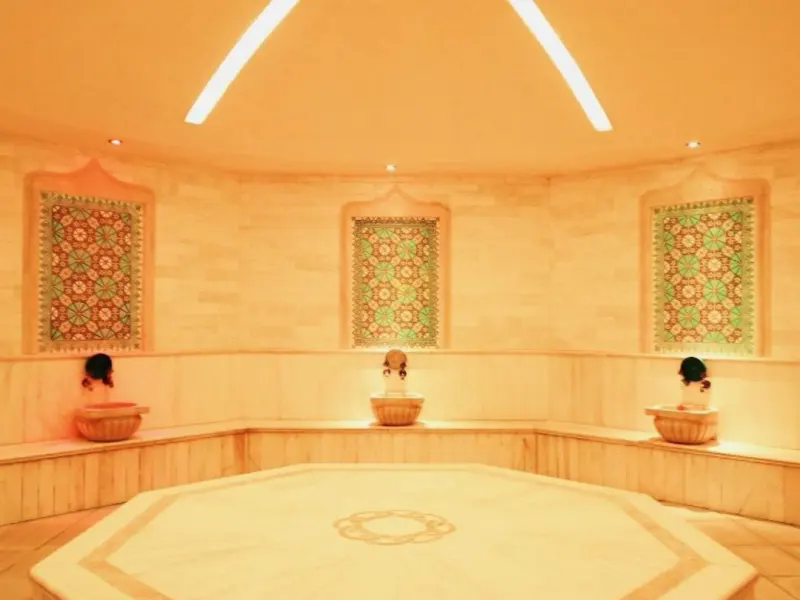
The Turkish bath is also a humid environment, but it works differently: in the hammam the heat comes from the marble floor and the navel stone, you pour water over yourself from the basins, and you are washed with kese and foam. The steam room, on the other hand, is a small space with its door kept closed, used only for sitting; there is no washing or kese inside. The order in which to use the wet-area stations is covered in the guide explaining the order of hammam, sauna, steam room and pool.
The hot, humid environment of a steam room is favourable for microorganisms. Wear slippers, avoid direct contact with the seating surface and spread a towel; using your own towel and slippers in shared areas reduces the risk of picking up a fungal infection. Observing the venue's cleaning routine and ventilation is a sensible way to choose; a musty smell, water pooling on the floor and blackened grout are signs to watch out for.
Because of the high heat and humidity, the steam room puts a load on the circulatory system. Doctor's approval is needed for cardiovascular disease, uncontrolled blood pressure, heart rhythm disorders, epilepsy and diabetes. For people with asthma, high humidity can be soothing for some and a trigger for others; consult your doctor. It is not recommended during pregnancy. Do not go in after drinking alcohol. It should not be used if you have a feverish illness, an active skin infection or an open wound. If you feel dizzy or nauseous, leave immediately.
The steam room is rarely charged separately; along with the hammam and sauna, it is included in wet-area entry, a hotel stay, club membership or a spa package. The total depends on the type of facility, whether day-use entry is available, how long you can use it, whether a hammam ritual or massage is added to the package, and weekend and seasonal differences. Before you go, you can ask:
10-15 minutes at a time is enough. As with the sauna, you use it in cycles: steam room, cooling down, rest, which can be repeated 2-3 times. Because the high humidity makes it harder to sweat, your body temperature can rise faster than you expect, so don't stay in longer.
It depends on what you are looking for. A sauna is dry heat and gives a more intense feeling of warmth; it is preferred for muscle relaxation. A steam room is very humid, does not dry out the skin and is found soothing for the airways. People who are uncomfortable in dry heat or who suffer from dry skin prefer the steam room.
It varies. Humid air can be soothing for some people with asthma and a trigger for others. Do not use it regularly without consulting your doctor, and keep your first visit short. If you feel short of breath, leave immediately, and keep your reliever medication with you if you have one.
A hot, humid environment favours microorganisms. Wear slippers, avoid direct contact with the seating and spread out a towel to sit on. Shower before going in. Looking at the venue's cleaning routine and ventilation is a sensible way to judge it when choosing where to go.
Because the humidity does not dry out the skin, it is considered more suitable than a sauna, and it is said to open the pores and make cleansing easier. However, with conditions such as active acne, eczema and rosacea, the heat can make symptoms worse; if you have any of these, consult your dermatologist.
It is not recommended. A rise in body temperature is harmful during pregnancy. In addition, the wet, slippery floor carries a risk of falling, and visibility is poor. The general advice is to stay away from saunas, hammams and steam rooms during pregnancy.
Do not go in if you have a fever; during a feverish illness, heat treatments put extra strain on the body. With mild nasal congestion and no fever, the humid air can bring temporary relief, but it does not change the course of the illness. As there is also a risk of passing it on to others in a shared area, it is better to wait until you have recovered.
High humidity and hot air make breathing feel heavier, especially the first time. Sitting near the door on the lower bench, breathing calmly through your nose and keeping your time short is usually enough. If shortness of breath, chest tightness or dizziness does not pass, leave immediately; if you have a respiratory condition such as asthma or COPD, consult your doctor before using the steam room.


Are you sure?
Choose one more venue to compare.